
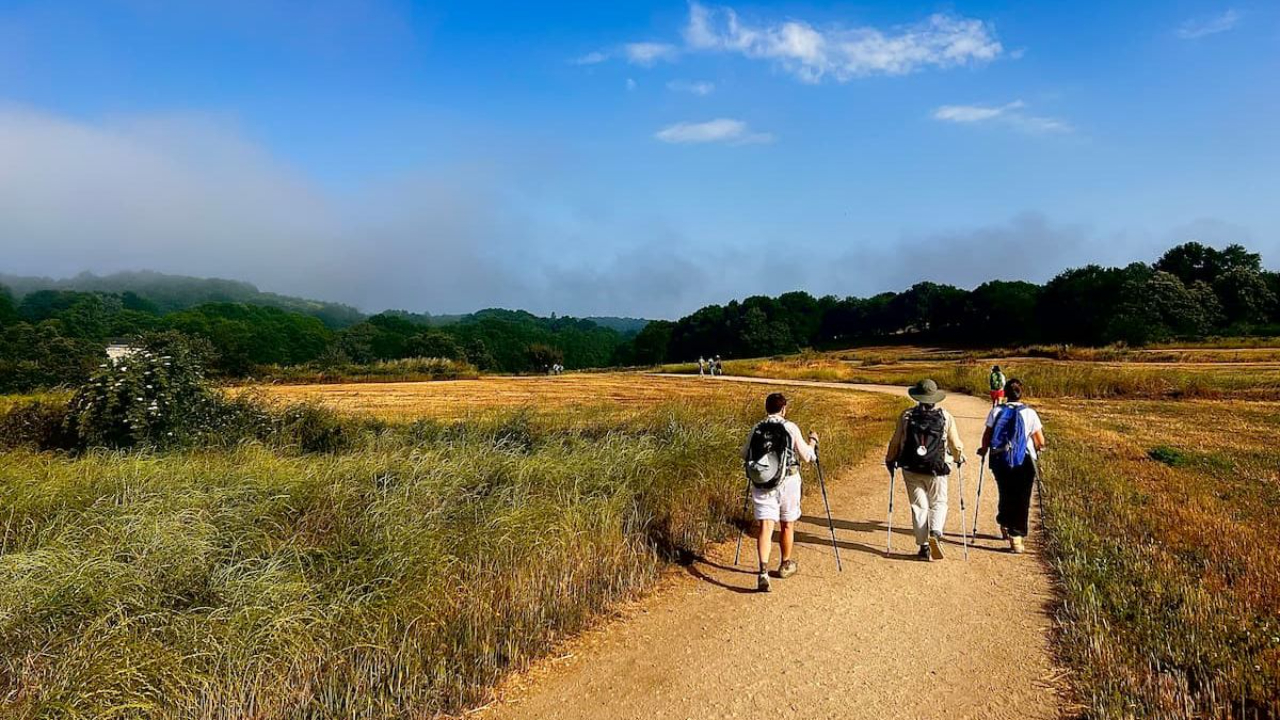
The Pilgrim's Mindset: Ancient Medicine for a World in Transition
Jul 03, 2026Long before modern life taught us to seek healing in therapy offices or through medication, people walked. They left home, crossed thresholds, endured discomfort, prayed, listened, made offerings at shrines, sky-gazed and decoded the stars, devoted themselves to a higher power and purpose, gained insight through sacrifice, and returned transformed with a boon they could share with their community.
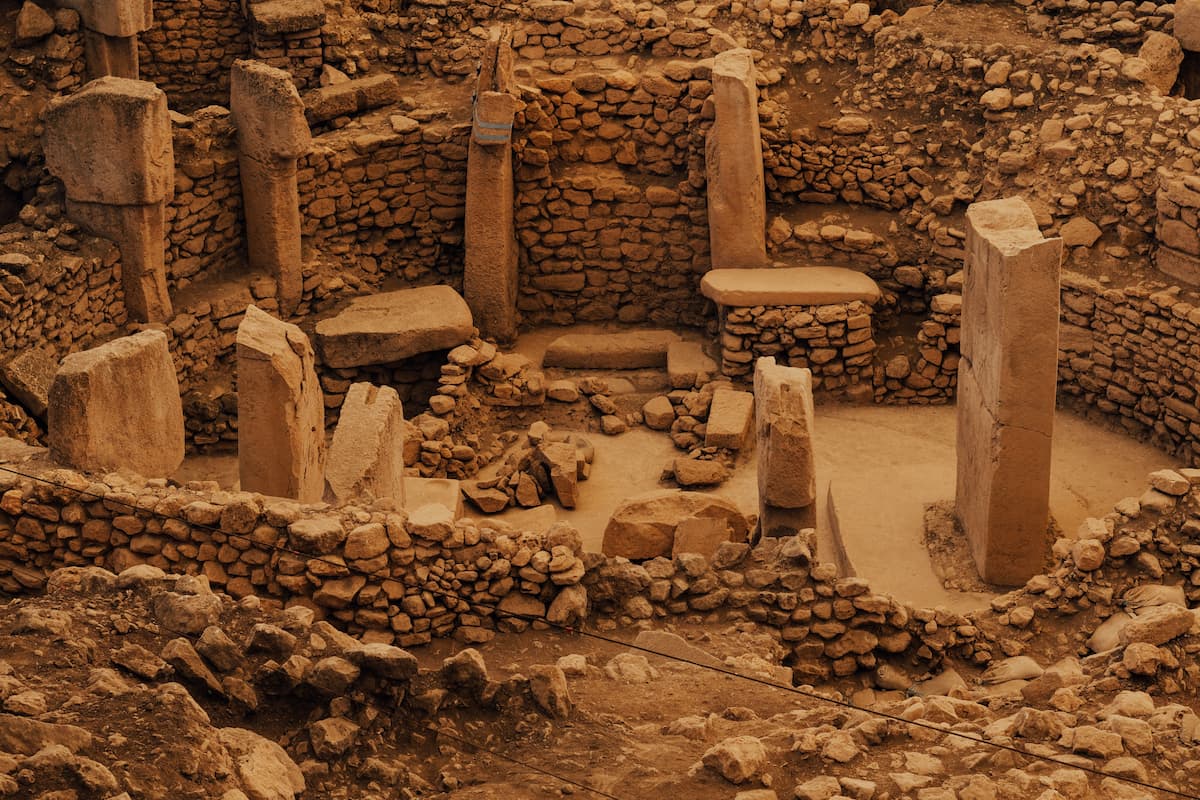
This was the ancient medicine of pilgrimage. The oldest known monumental ritual complex in the world, Göbeklitepe in southern Turkey, dating back roughly 11,500–12,000 years ago (c. 9600 BCE), appears to have drawn people from across the surrounding region into a shared ceremonial landscape where cosmos and psyche, heaven and earth, inner and outer worlds met in sacred ritual and communal gathering.
Likewise, at Nabta Playa in the Nubian Desert of southern Egypt, dating roughly 7,500–6,500 years ago (c. 5500–4500 BCE) and home to one of the world's earliest known ceremonial astronomical stone complexes, pastoral peoples gathered around alignments linked to stars, seasonal cycles, and the coming of the rains. While we cannot know exactly how they understood these journeys, the demanding movement across the desert landscape — guided by celestial rhythms, ecological dependence, and ritual gathering — suggests that meaning and transformation were embedded not only in the sacred site itself, but in the arduous process of reaching it.
The same pattern becomes even more visible at the Asklepion at Epidaurus, the great healing sanctuary of ancient Greece, flourishing from roughly the 6th century BCE onward and reaching its height in the 4th century BCE. Pilgrims traveled considerable distances seeking cures through purification rites, offerings, sacrifice, sacred bathing, and dream incubation in the presence of Asklepios, the god of medicine. Yet healing was not confined to a single moment inside the sanctuary walls. The wider ritual arc — departure from ordinary life, sacred travel, front-end purification, entry into a consecrated healing environment, and back-end integration — formed an integral sequence of the therapeutic experience stretched over miles and days. The site mattered, but so too did the path that led there.
Today, that medicine is newly relevant. Many people feel overwhelmed by the ground constantly shifting beneath their feet. The old certainties around work, identity, family, culture, and the future no longer feel as stable or reliable as they once did. Our civilization is in collapse so that it can be renewed. In such times, we need more than a vacation or escape. We need a way to become stronger, wiser, more adaptable, and more compassionate, to pave the path forward toward a better future.
We need an initiatory process to develop what I call the pilgrim's mindset.
The pilgrim's mindset is the ability to meet life — with all its beauty and misfortune, opportunity and challenge — as a path of transformation. It trains humility when we cannot control the road, resilience when the body grows tired, tolerance when things do not go our way, creativity when plans change, and compassion when our own wounds or the suffering of others come into view. It teaches us how to take unavoidable hardship onto the spiritual path rather than run from it or be defeated by it.
This mindset is not vague inspiration. It is a training in life skills for the new world now emerging. Across my books, clinical work, and pilgrimages, I have identified six core capacities of the pilgrim's mindset: nervous system regulation through trauma-informed mindfulness; shadow work to integrate unconscious complexes, informed by Jungian analysis; meaning-making to help us rewrite a more flexible and heroic narrative of our life, inspired by Joseph Campbell's monomyth; tantric visualization to rehearse, envision, and embody our highest ideal; astrological foresight to align with the archetypal energies of the incoming Age of Aquarius; and the art of pilgrimage itself to test and apply these skills in a living laboratory.
Together, these capacities help us remain steady, or at least forward moving, under pressure, confront the inner patterns that destabilize our lives, transform struggle into purpose and meaning, rehearse new ways of responding to the world based on wisdom and altruism, align ourselves with the distinctive signature of the new age now dawning, and use the uncertainty and challenges of the pilgrimage path to develop tolerance, resilience, and compassion.
In the context of the great cosmological reboot our civilization is presently undergoing, these are not optional spiritual luxuries. They are survival skills for the soul. Just as leadership and institutions fail us, pilgrimage teaches self-reliance. Just when uncertainty threatens to paralyze us, pilgrimage develops greater tolerance for ambiguity and helps us step forward into the unknown. And just as technology and AI overwhelm our attention and dilute identity, pilgrimage restores what makes us most human: consciousness, compassion, community, and the capacity to walk through difficulty with meaning.
For 2027, I have custom-curated and will guide two of the world's great walking pilgrimages through Sacred Earth Journeys: the Camino de Santiago in Spain and the Kumano Kodo in Japan. Recognized as the world's only two great UNESCO-designated pilgrimage trail networks, these ancient routes form a rare East–West training ground for the art of pilgrimage and the development of the pilgrim's mindset. This is not just for self-mastery, but for stewardship and service to others.
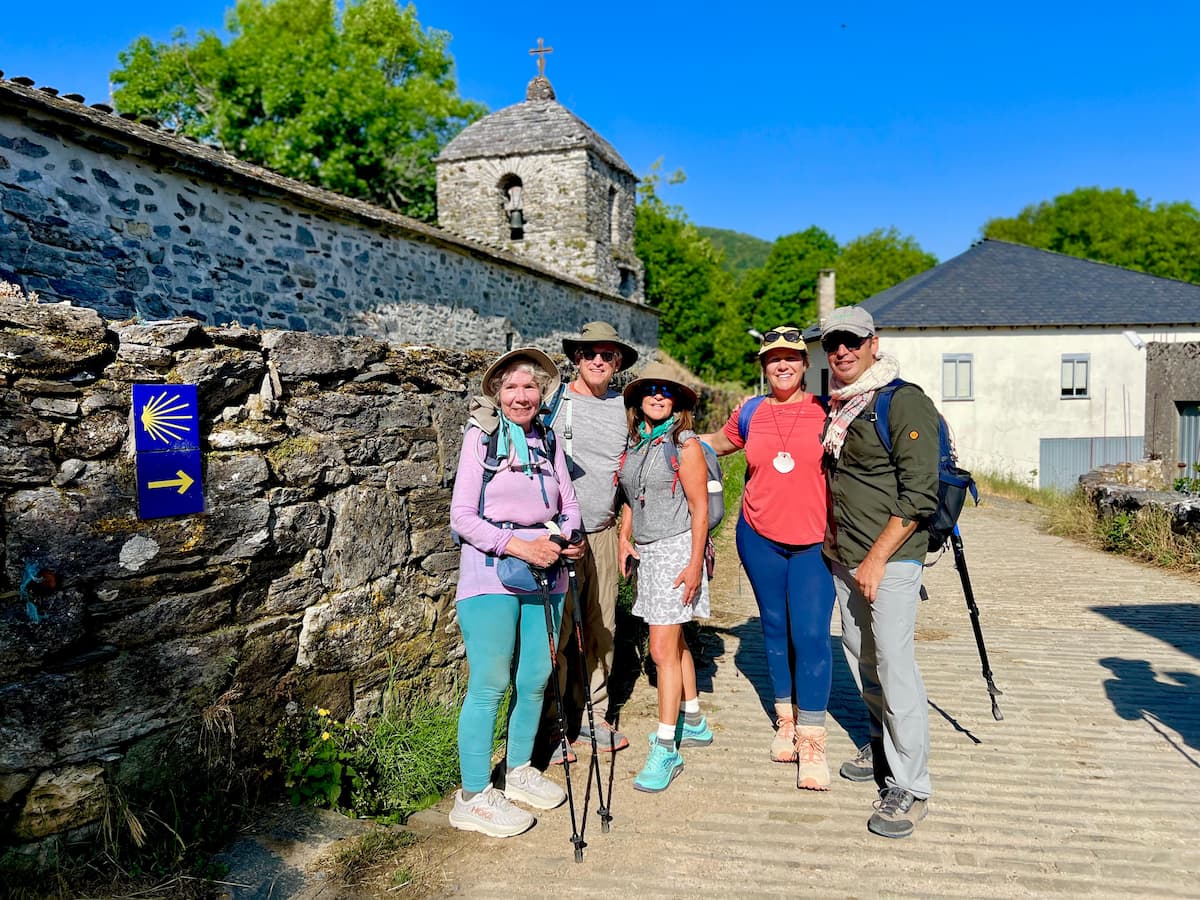
The Camino de Santiago is one of Europe's most enduring spiritual arteries. Since the Middle Ages, pilgrims have walked toward Santiago de Compostela, where tradition holds that the tomb of St. James the Apostle was discovered in Galicia in the ninth century. Over centuries, the Camino became more than a religious route. It became a living network of churches, bridges, hospitals, villages, roadside crosses, songs, stories, and acts of hospitality that shaped European culture through devotion, hardship, encounter, and exchange. To walk the Camino today is to enter a human current of sacrifice and service that has been moving for more than a thousand years.
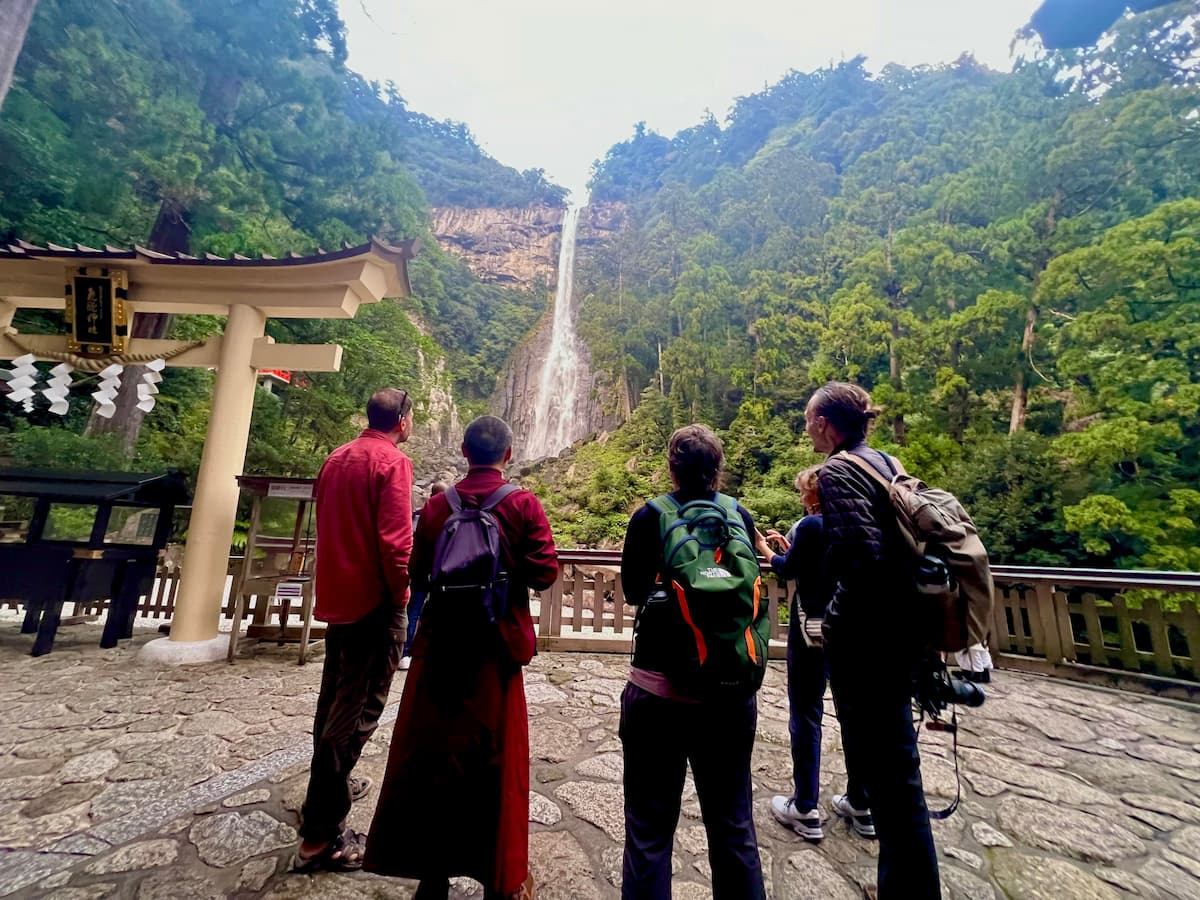
The Kumano Kodo carries an equally ancient but distinctly Japanese transmission. Set in the dense, enigmatic forests of the Kii Mountains, the Kumano pilgrimage routes link sacred sites associated with Shinto, Buddhism, mountain shamanism, purification, and reverence for the living landscape. For over a thousand years, emperors, aristocrats, monks, ascetics, samurai, and ordinary people walked these mountain paths toward the Kumano Sanzan, the three great shrines of Kumano, quieting the mind through contemplation to commune with nature spirits, ancestors, and the living lineage of awakening. If the Camino carries the devotional heart of medieval Europe, Kumano reveals the Japanese genius for finding the sacred in nature itself — in forest, river, waterfall, mist, fire, and mountain silence.
You may walk one or both tours in the same year or over time. Each journey is complete in itself. Together, they offer a deeper initiation into how walking, sacred landscape, group practice, and contemplative teaching can prepare us for the new world we are now entering. Our old ambitions, values, and skills no longer hold. It is time we embrace a new mindset and skill set that actually prepares us for what is already unfolding.
These are not conventional sightseeing tours. There is no white-glove service, no emphasis on fleeting pleasures or acquisition, nor on pampering you with wellness treatments. They are psychologically informed rites of passage shaped by spontaneous challenges, meditation, philosophical teaching, group skills, and my signature walk-and-talk method. You are not a passive observer, but an active participant: less a guest to be lavished or entertained, more a member of a team on a mission. Along the way, we learn to pay attention to the body, dreams, emotions, the path beneath our feet, the landscape around us, and one another. Wisdom is not handed down only from the teacher. It emerges through the land, the body, the group, and each pilgrim's direct experience — particularly through our courageous encounters with the shadow, those unconscious parts of the psyche we have not yet discovered or integrated. Without trial, there is no treasure.
The Camino and Kumano offer unique and highly complementary environments for developing the pilgrim's mindset.
The Camino opens outward, timed with the cusp between spring and summer. Rooted in the Christian pilgrimage to Santiago de Compostela, it is a path of community, compassion, shared meals, honest conversation, revelry, and walking together toward the shrine of St. James. It teaches us how to listen, how to soften around our wounds, how to enjoy the bounty of life with gratitude, but also how to move forward through pain and uncertainty, and how to meet others with greater sensitivity and patience. The destination of Santiago is finally discovered not only in the magnificent cathedral at the trail's end, but anywhere along the route, directly at the center of one's open heart.
By contrast, Kumano draws inward, timed with the cusp between autumn and winter. Rooted in Japan's refined spiritual culture of Shinto, Buddhism, mountain shamanism, and purification, the path leads through temples, forests, shrines, silence, ritual, and the elemental forces of fire and water. More feminine in its character, the Kumano teaches humility, reverence, surrender, receptivity, and the quiet strength that comes from listening beneath the noise of ordinary life to the deeper intuitive wisdom within. The destination at Nachi Falls, the great waterfall shrine that concludes the Kumano pilgrimage, becomes a mirror for the inner clarity of one's own awakened mind.
One tour trains the heart through relationship. The other clarifies the mind through contemplation. Together, they offer an alchemy of pilgrimage: uncertainty becomes steadiness, discomfort becomes resilience, vulnerability becomes compassion, and fear becomes wisdom.
These journeys are for those standing at a threshold — people seeking beauty and culture, but also willing to push boundaries and make sacrifices to discover a more meaningful way to meet the next chapter of their lives. They are for those who sense that the world is irreversibly changing and are willing to let go in order to find renewal.
Before embarking on one or both tours, let me ask you: are you a pilgrim? The tourist seeks a break from ordinary life; the pilgrim seeks to transform the way they live it. The tourist wants comfort, control, and plans to unfold as expected; the pilgrim understands that discomfort, delay, and uncertainty may become part of the teaching. The tourist consumes places as experiences; the pilgrim enters into a reciprocal relationship with the land, culture, group, ancestors, and sacred forces of the path. The tourist returns with photographs, souvenirs, and memories; the pilgrim returns with humility, resilience, compassion, and a deeper capacity to meet life as it is.
Next year or in the coming years, walk one, or both, with me, and enter a living tradition of transformation. Not to escape the world, but to return to it more grounded, skillful, and awake.
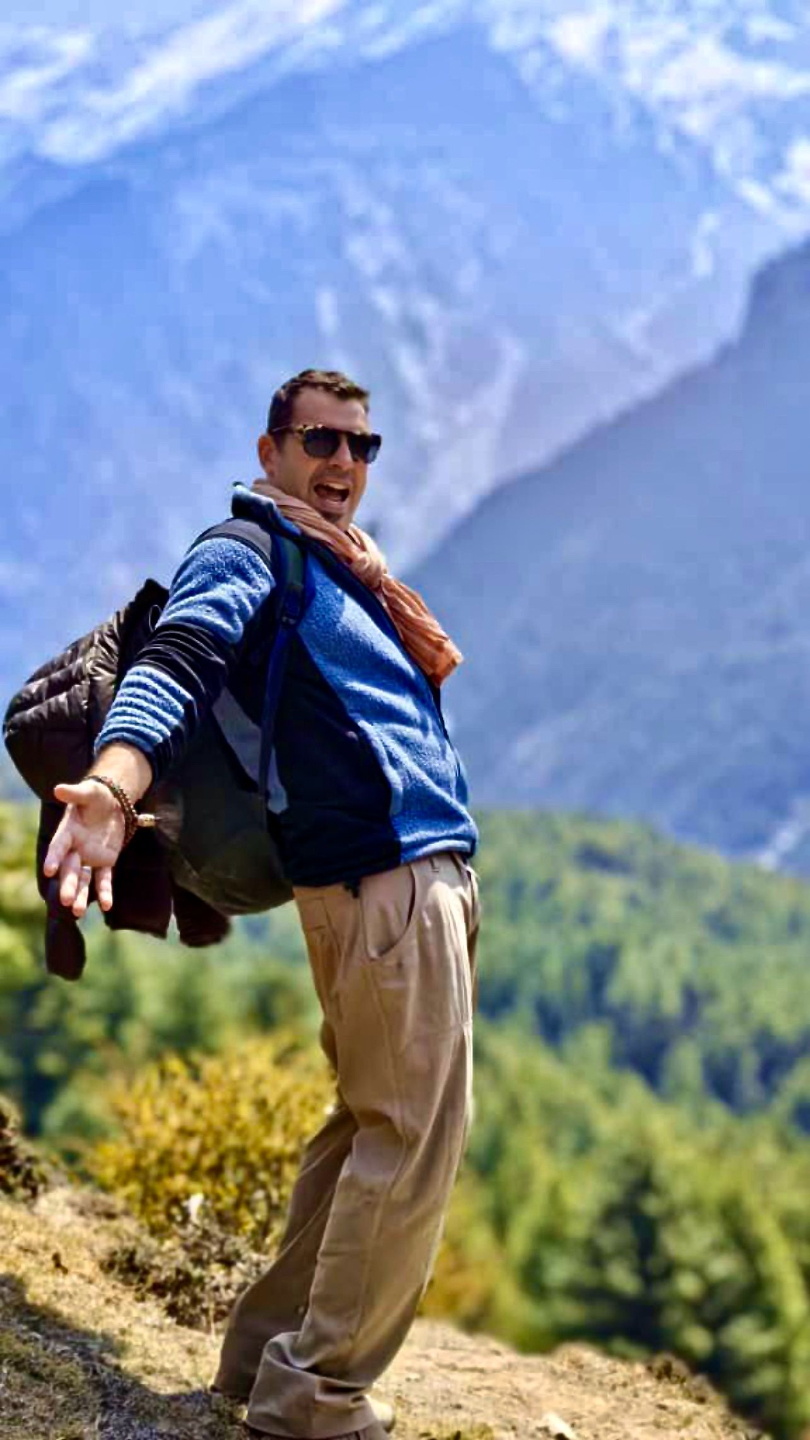
Dr. Miles Neale is a psychotherapist, teacher of Tibetan Buddhism, and founder of Gradual Path for inner and outer journeys. He is the author of Return with Elixir and Gradual Awakening, and co-editor of Advances in Contemplative Psychotherapy. Miles has taught at integrative medical clinics at Harvard, Columbia, and Cornell University Hospitals, leads pilgrimages worldwide, and is based in Bali, Indonesia.
Stay connected with news and updates!
Join our mailing list to receive the latest news and updates from our team.
Don't worry, your information will not be shared.
We hate SPAM. We will never sell your information, for any reason.


