
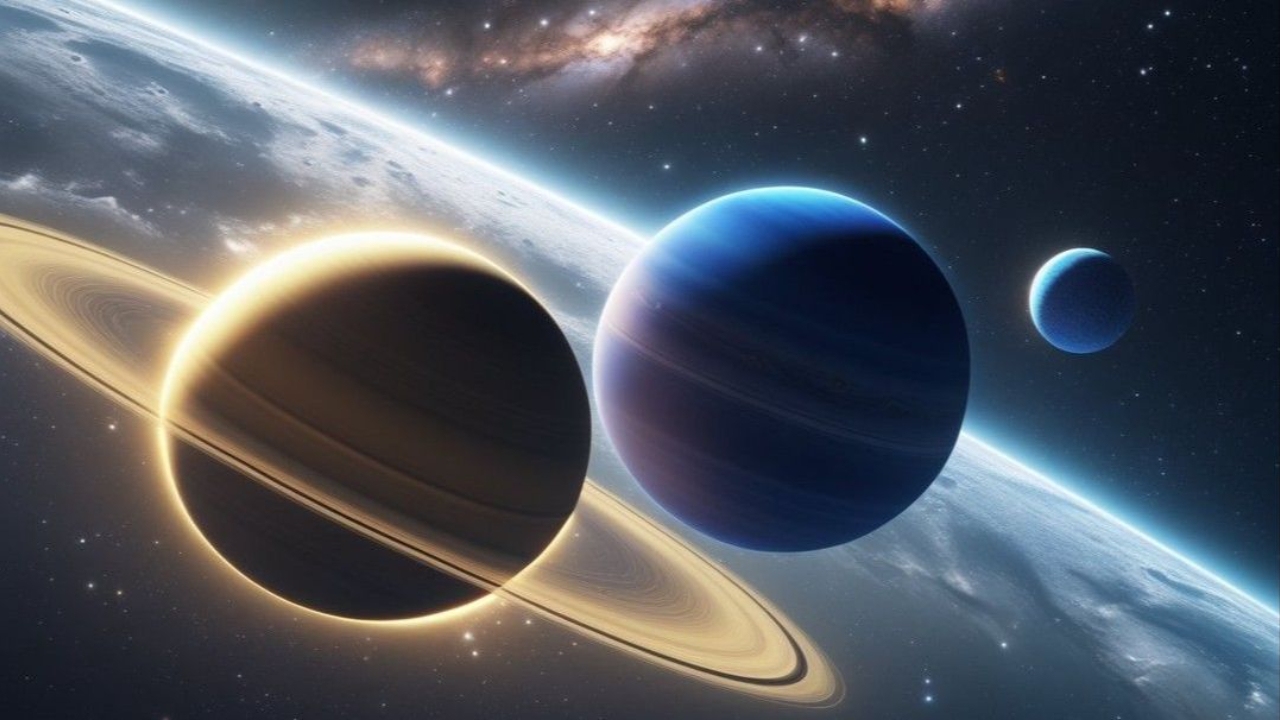
A New Beginning: Saturn Neptune Conjunction 2026
Feb 25, 2026A rare Saturn-Neptune conjunction at 0 degrees Aries occurred on February 20, 2026, the first degree of the zodiac, and astrologers are reading it as a reset point: a dissolving of an old world order, a new vision meeting form, our highest dreams or deepest delusions meeting structure, imagination meeting responsibility. However we interpret astrology, this is a useful frame. It reminds us that life moves in waves and currents of possibility, but we still have to choose how we move through them. We can fight the current, drift in it, or lean in and catch the wave.
For me, this conjunction is not theoretical. It is tangible. It is present. And it is already demanding something of me.
The annual Tsum pilgrimage I’ve been building, which launches in just a few weeks, captures it perfectly.
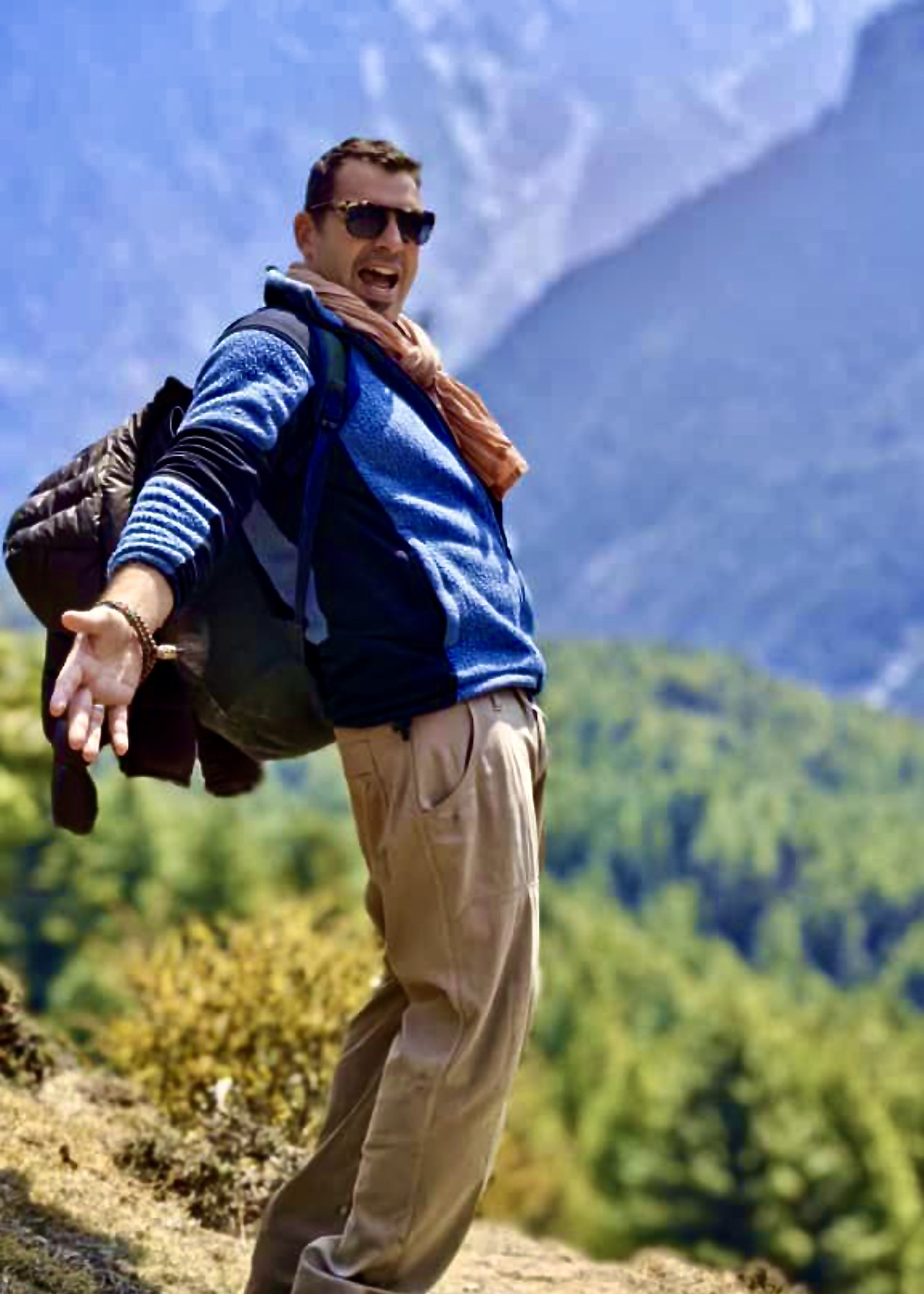
I feel this project very personally because it is not simply a new offering I’m rolling out. It is the convergence of some of the deepest threads of my life: my early formation in dharma, my relationship with Geshe Tenzin Zopa, my work with students, my concern for the future, my children, and a very concrete call to build something that can outlast me. All of it is converging at a reset point.
Thirty years ago, when I was twenty, I joined the Antioch Buddhist Studies Program in Bodhgaya, India, for a semester study abroad. That period catapulted my life. I was not just studying Buddhism as an idea. I was living with monks, meditating in the mornings, studying the three vehicles, and taking refuge under the Bodhi tree. Visionary teacher Robert Pryor partnered with Tibetan master Chokyi Nyima Rinpoche to co-create a unique container that, for more than three decades, offered students from around the world more than academics. It gave us a lived encounter with dharma at its source. It changed nervous systems, worldviews, and lives.
Both my roommates from that semester went on to become PhD Buddhist scholars. I became a Buddhist psychologist. Different expressions, same root.
Now, at fifty, I can feel that root surfacing again to produce new fruit, fulfilling a generational cycle. Back then, I entered a powerful container. Now I am helping build one.
That is what the Tsum Valley pilgrimage and retreat I've been building represent for me.
This is why the Saturn–Neptune symbolism feels so precise right now. Neptune governs vision, dreams, devotion, and unity—but it also dissolves boundaries, loosens identities, and can blur reality itself. Saturn governs structure, law, institutions, and the hard edges of the world. In their conjunction, we feel both movements at once: old forms washed by Neptune’s tide, and a demand that new ideals become tangible, durable, and real.
Aries is the ignition point of the zodiac: the first spark, the bold pioneer, the force that dares to move into the unknown and begin again. In its shadow, that same force can turn impulsive, isolated, or self-driven without wisdom. But at its best, Aries is courage in motion.
This conjunction in Aries at zero degrees is extraordinarily rare—often said to have last occurred roughly 6,000 years ago—and it asks something of us now: courage. The bold heart to move, with passion and urgency, from a new inner vision (Neptune) into embodied action and manifestation in the world (Saturn).
That is the threshold we are standing in now.
The annual Tsum pilgrimage is a loom for the various threads of my life.
More specifically, it is at least five threads at once.
First, it is a place for pure dharma study and practice, especially Lam Rim and tantra as initially conceived by Lama Zopa Rinpoche.
I feel strongly about this because we are living in a time when spirituality is watered down and often sullied by dubious contaminants like “laws of attraction” thinking. Our spiritual lives can get pulled into consumerist trends that bait us into buying the next glossy program or glittery retreat on an endless treadmill. Tsum Valley, by contrast, is still raw, rough, and real. It makes no sensational promises. It demands so much physically and mentally that only the most sincere and well-intended manage to taste the nectar of its authenticity.
Rachen Nunnery is not a finely curated wellness environment. It’s a spiritual kick in the ass, just as it was for me in 1996 in my monk’s cell at the Burmese Vihar in Bodhgaya. It is a living monastic practice environment, still relatively hidden from the world and all its distractions, comforts, and lures. The nuns are not performing spirituality for Instagram. They are hidden yoginis preserving centuries of lineage without any need for recognition or reward.
In my own writing on service, I’ve tried to name this directly: the Rachen nuns are not the ones in need. In many ways, we are. We may have more money, more mobility, more access, but spiritually many of us arrive starving: scattered, anxious, isolated, and over-identified with our personal dramas. The nuns, by contrast, are rich in the ways that matter most. They have joy, discipline, devotion, and strong community. I wrote that “we’re not the benefactors, but the beneficiaries,” and I still believe that with all my heart.
So part of my Tsum vision, inspired by my early days under Robert Pryor and Chokyi Nyima Rinpoche, is to create a serious bridge for students who want the "real deal" and aren't afraid to pay the emotional and physical price or make the sacrifices. Lam Rim gives sequence and orientation. Tantra gives transformative methods. Geshe-la gives transmission, rigor, and heart. The nuns give embodiment and joy. Tsum gives safe haven.
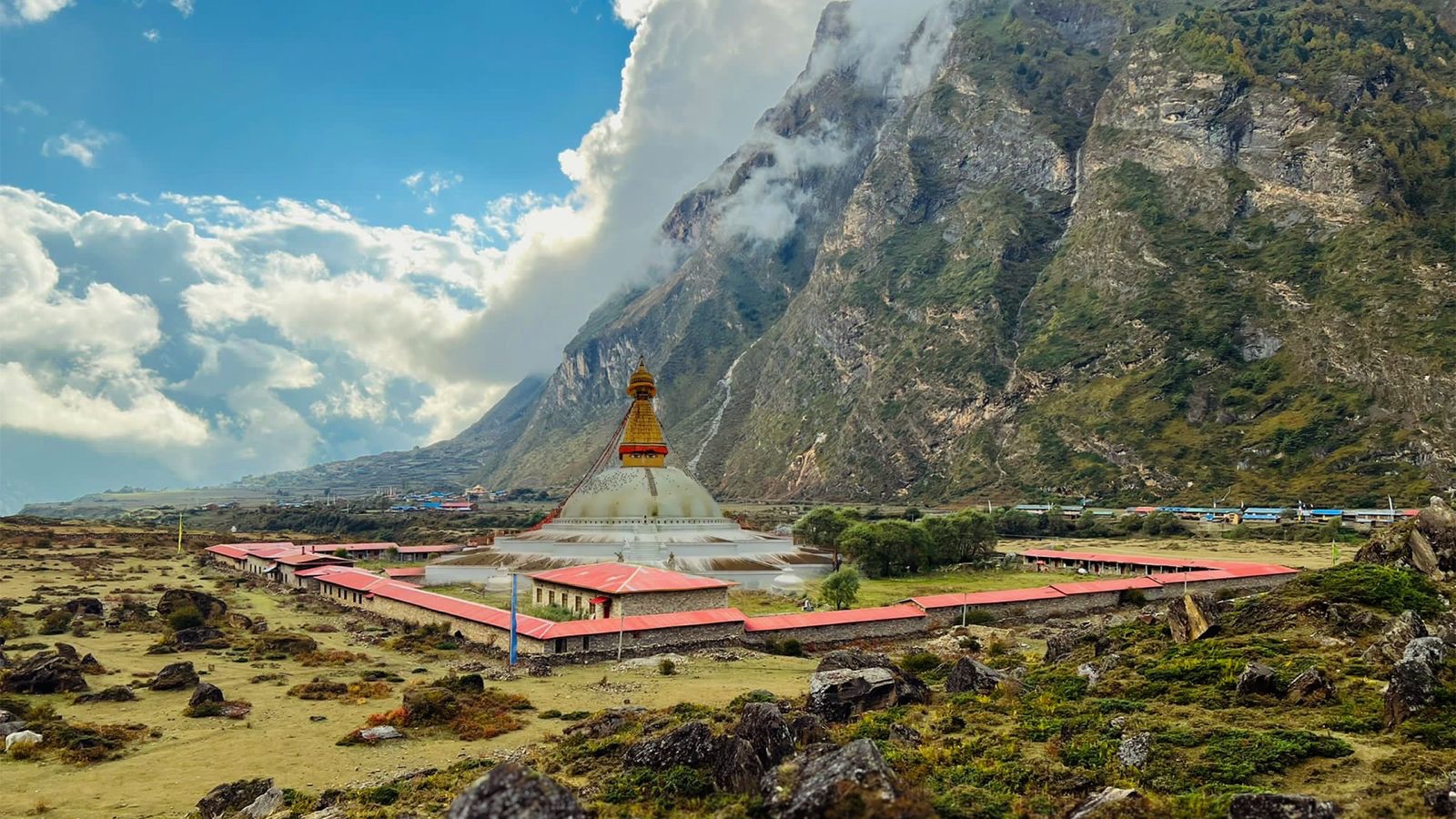
Second, I do not see Tsum Valley only as a retreat destination. I see it as a future-facing think tank.
That may sound like a strange phrase to pair with a Himalayan nunnery, but for me it is natural. We are in a period of civilizational collapse. I’ve written and spoken often about this 2025–2030 window, and whatever language one uses—prophecy, polycrisis, death-rebirth, collective initiation—the point is the same: the old structures are breaking down, dark forces are being unveiled so we can heal and realign them, a new world is being incubated, and for its establishment we need better inner and outer tools.
What became so clear for me in Bhutan through Geshe-la is that prophecy is not about surrendering to inevitable misfortune. It is about remembering our agency and forging forward with a clearer vision and more altruistic vibration precisely at our darkest hour.
I want the Tsum pilgrimages to be a place where we do intensive dharma practice and also think clearly together about how to rebuild a better future that aligns with the incoming signature of the Aquarian age: decentralized, dignified, communal, energy-based, regenerative, and technologically advanced. Not just exploring ideas, but experimenting with implementation, not driven by fear or panic, but by curiosity and creativity.
I'm imagining future gatherings where dharma remains the center, while other disciplines come into meaningful dialogue with it: natural medicine, regenerative farming, ecology, bitcoin, conscious leadership, and AI. In other words, how do we train the mind and rebuild the world at the same time? How do we dream big (Neptune) but also build new systems (Saturn) that reflect what we’ve learned from the collapse of the old?
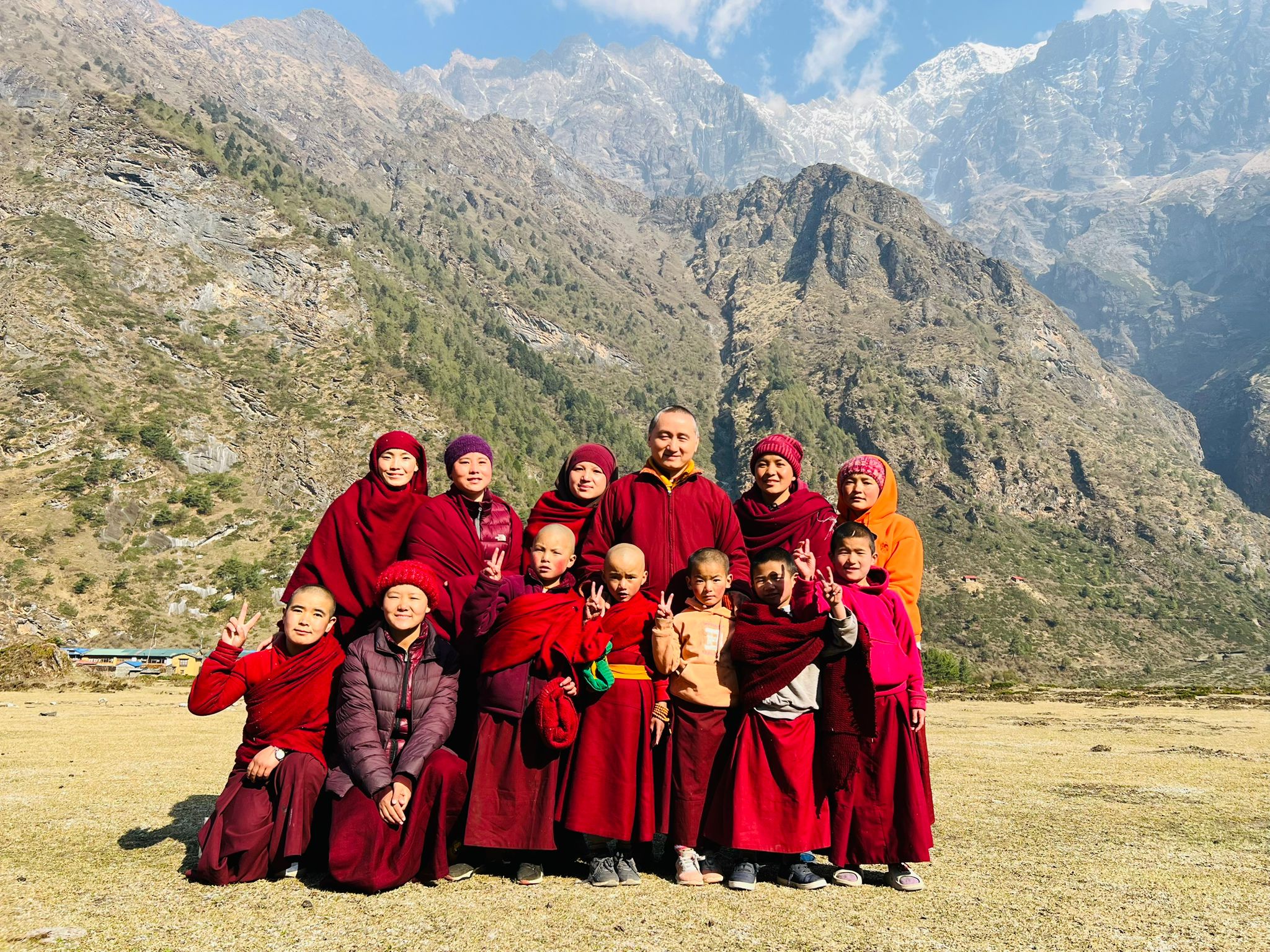
Third, Tsum is a long-view service project, not a one-off tour.
This is probably the most Saturnian part of the whole vision. Logistics matter. Infrastructure matters. Stewardship matters. If this is going to become an annual pilgrimage and retreat that genuinely serves the local community, Geshe-la’s broader vision, and our students, then we have to think in decades, not seasons.
I’m not interested in extracting peak experiences from a sacred place and moving on like a tourist. That is exactly what is happening in much of the Euro-American psychedelic movement in Peru and the Amazon right now: pre-packaged plant medicine holidays driven by the old colonial extractive impulse, dressed up in the language of New Age spirituality and wellness.
This is also why the Saturn–Neptune conjunction matters. Neptune can inspire vision, devotion, and healing—but it can just as easily blur lines, intoxicate, deceive, and inflate grandiose fantasies. Saturn is what tests the vision. It asks whether what we are invoking can be grounded with humility, ethics, and form. The conjunction can become a launch point for sober, embodied transformation—or a glamour field for spiritualized consumption.
I'm interested in helping build conditions, year by year, so that Rachen becomes more and more supportive for the nuns, for local villagers, for visiting students, and for future groups. In my “Rethinking Service” piece, I described Tsum as the dharma equivalent of the Amazon or the Great Barrier Reef—a rare sanctuary that could easily be degraded if we bring the wrong mentality. I meant that literally. Roads are improving. Tourism always follows roads. If we are not careful, the same forces that have overrun other sacred and natural sites will eventually reach Tsum too.
So yes, I am thinking about collective investment models, repeat participation, and long-term sustainable buildout. Not because I want to “develop” Rachen in a worldly way, for profit, or even for my personal benefit, but because I want to help safeguard it while supporting Geshe-la’s long-term vision for practice, study, and retreat. This is why I sometimes liken the Tsum pilgrimage to a spiritual timeshare, where our investment helps maintain the structures and ethos year after year and beyond.
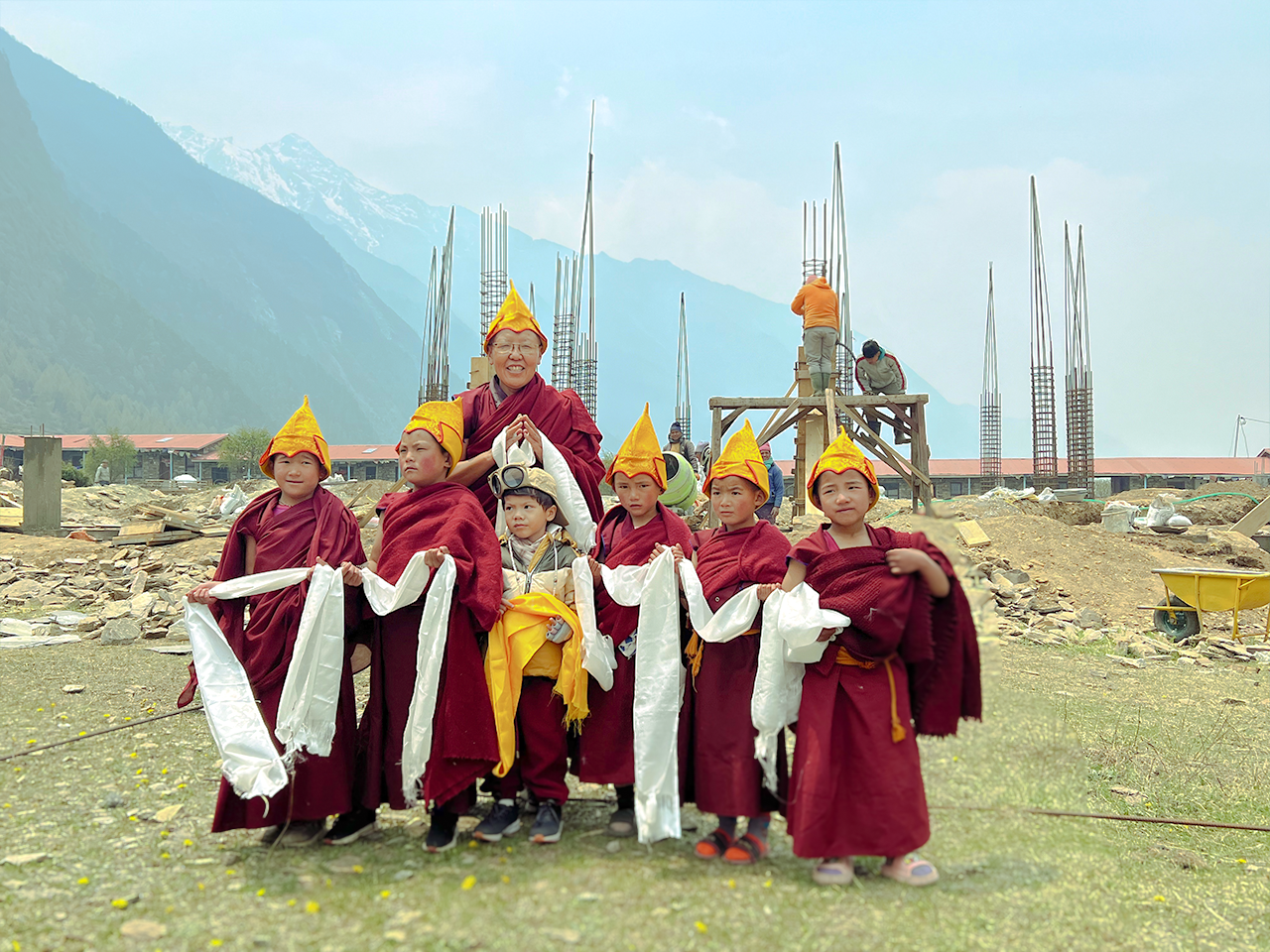
Fourth, the World Peace Stupa is the symbolic and spiritual heart of all of this.
I’ve written before that the stupa is a beacon, even an antenna tower, broadcasting a signal of hope at the point in our civilization’s rebirth when the night is darkest. That is not mere poetry for me. That is exactly how I experience it
The stupa matters because it takes all of this out of the realm of single-lifetime, self-improvement and places it in the realm of transgenerational service.
This is not about a meaningful midlife project for me. Nor is it only about offering our students a profound pilgrimage. It is about participating in something that carries blessings forward.
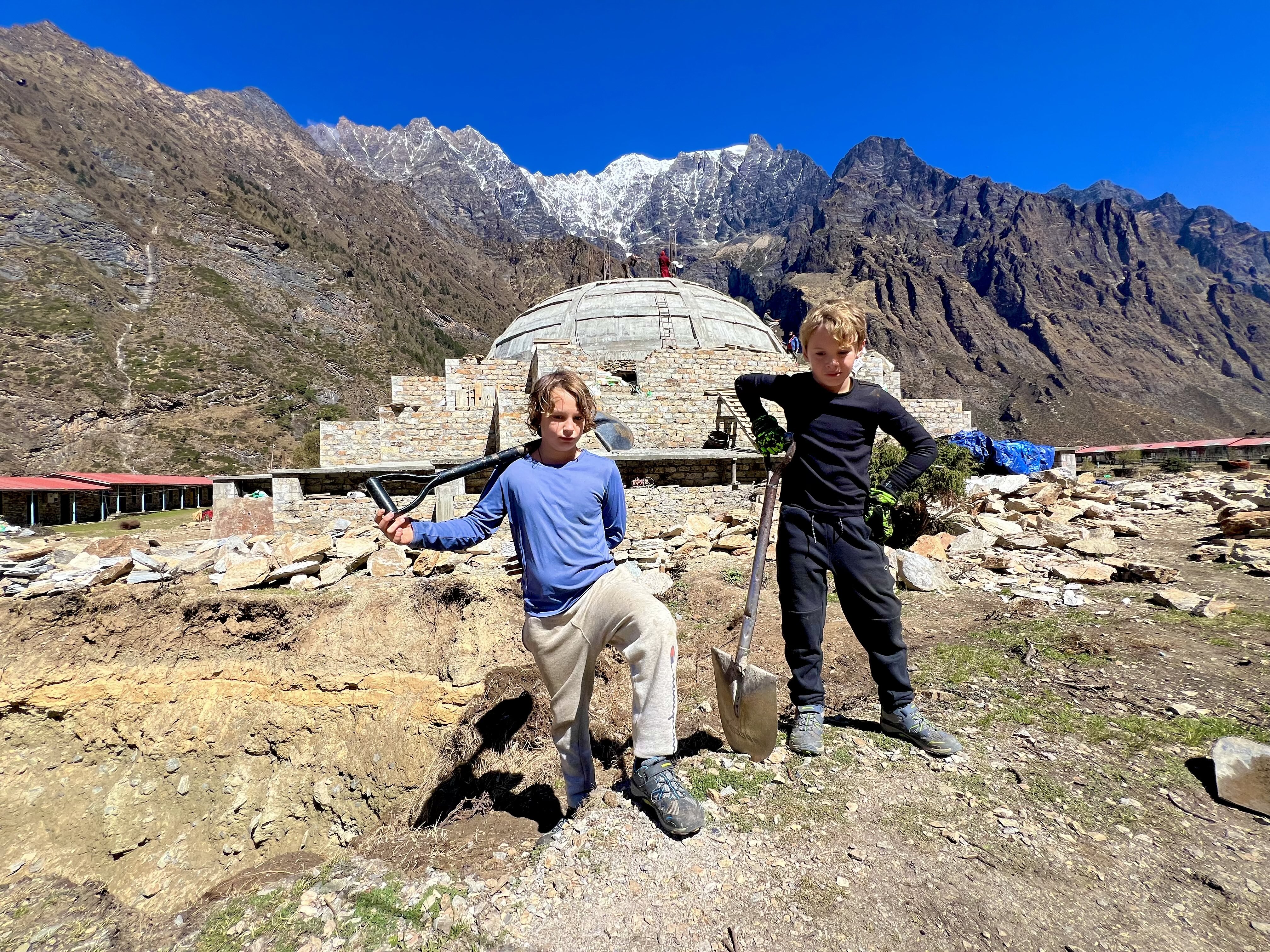
Geshe-la has said this stupa should stand for a thousand years, so future generations may come to pray, meditate, and cultivate consciousness in relationship not only to the sacred objects it enshrines (including billions of Namo mantras), but to what it signifies: the awakened mind itself.
I once described it as a symbol of enlightenment and unity, a beacon of hope for future generations. That still feels true to me.
I brought my young kids to Tsum. They played in the rubble of the Stupa and helped the builders with the stones. I want them to return there long after I’m gone. That is the scale of feeling this project evokes in me. It is not about career. It is about continuity.
Fifth, and most intimate for me, this project is an act of service to Geshe-la.
This may be the deepest part, and also the hardest to explain publicly without sounding sentimental. But if I’m being honest, one of the great breakthroughs of the last few years has been recognizing my role more clearly. In “Gone Beyond Struggle,” I wrote about the painful but liberating realization that I was not meant to become “a great teacher” in the way my ego once craved. I realized I was meant to serve a great master and help support Geshe-l's Bodhisattva activities. That insight melted (Neptune) a long-held fantasy perpetuating disappointment and confusion in me. It gave me a new identity, sense of purpose, and function (Saturn) in the world.
Tsum is the concrete expression of that realization.
This is not something Geshe-la ever demanded. In fact, he would never ask for it that way. It has to come from the student side. An offering. A willingness. A joyful burden.
And that, to me, is another hidden teaching in this Saturn-Neptune moment: the dream matures when it stops being about our self-image and becomes an offering.
So for students and friends reading this, I’m not saying everyone needs a Himalayan project. But I do think many of us are being asked a similar question right now.
What in your life is still a beautiful idea, but now wants bones?
What vision have you been circling that now requires structure, sacrifice, and commitment?
Where are you being asked to stop narrating and start building?
What delusions of grandeur (old world) can you allow to dissolve (Neptune), so that you can step forward into a brave new world as someone who can lead, contribute, or share with humility, dignity, and integrity?
For me, the answer is Tsum.
A dharma seat.
A place of refuge and rigor.
A future-facing think tank.
A long-view service container.
A way to support the stupa, the nuns, and Geshe-la’s vision.
A place my children, our children, can return to.
A place where sincere students ready to lay everything on the line can encounter something real enough to transform them.
That is how I’m reading this conjunction.
Not as prediction.
As responsibility.
Not as “what will happen?”
But as “what are we willing to build, together, right now as the flood water rises, and as the wild fires rage?”
Stay connected with news and updates!
Join our mailing list to receive the latest news and updates from our team.
Don't worry, your information will not be shared.
We hate SPAM. We will never sell your information, for any reason.

