
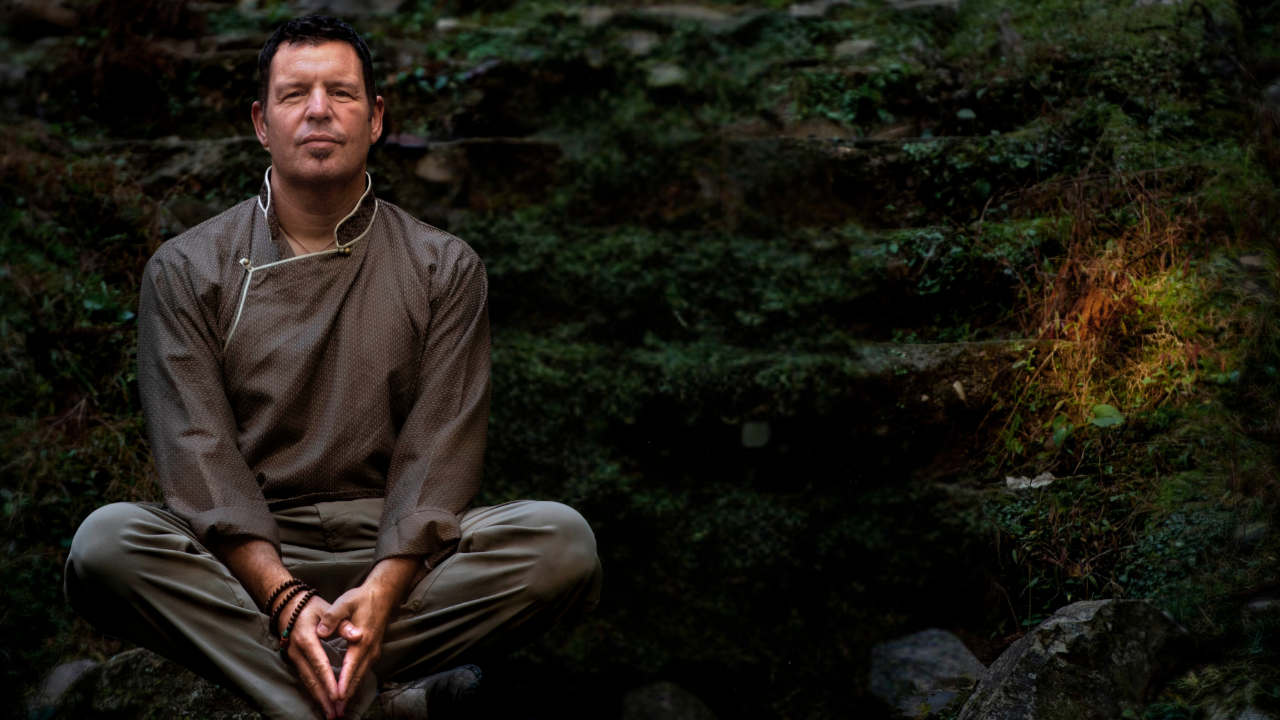
Liberation in Our Hands: A Pilgrimage on the Gradual Path
Dec 11, 2025It has been years since I last taught the lam rim, the subject of my second book Gradual Awakening. In that time, I was living the journey and writing Return with Elixir, guided by visions, synchronicity, dreams, and the stars themselves. But the lam rim, the gradual path, never gets old or dated. It remains the most relevant roadmap for anyone sincerely trying to understand and train their own mind.
Last October in Bhutan, on pilgrimage, our group received an ominous prophecy from an oracle. In trance, he said that 2025 to 2030 will bring challenges far greater than the pandemic. As the group anxiously absorbed this, our teacher Geshe Tenzin Zopa cautioned us not to confuse prophecy with fate. Nothing matters more than reclaiming our agency. Outer conditions may intensify, he said, but the inner conditions of the mind will always be the decisive factor. With a pointed finger gesturing to his palm, he repeated: “Destiny is in our hands.”
At that moment, something clicked for me. The phrase echoed a teaching I once received: Liberation in the Palm of Your Hand by Pabongka Rinpoche (1878 to 1941), one of the most influential lam rim teachings in history. Pabongka was one of the last great lamas of Tibet before the Chinese invasion in 1959. He offered massive cross monastery gatherings and presented the lam rim as a clear, step by step training system for enlightenment. His disciples eventually carried lam rim beyond Tibet to Asia and the West, proving these teachings were never meant to stay ancient or monastic but held universal relevance for anyone trying
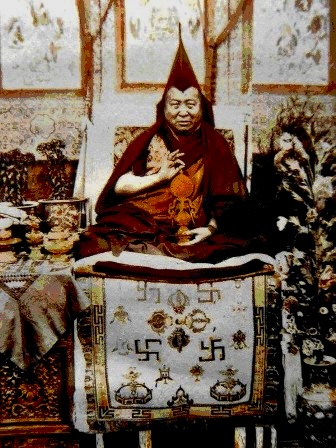
In Tibet, Pabongka’s chief disciple Trijang Rinpoche recorded the entire Liberation sermon and later became one of the Fourteenth Dalai Lama’s two primary tutors, thus shaping thousands of practitioners.
Among those he influenced was Gelek Rinpoche, who escaped Tibet as a young boy, taught for many years in New Delhi, India, at the Tibet House, where he would eventually meet and befriend a young, charismatic Robert Thurman. In the latter half of his life Gelek founded and stewarded the Jewel Heart community in Ann Arbor, Michigan, which transformed into a network of centers across America and Europe.
When I met Gelek, what struck me wasn’t his renowned high stature or scholarly prowess but his humanity, gentle, down to earth, humorous. Jewel Heart reflected his qualities: families gathered, children played around the dharma center, meditation was joyful and brief, rituals were explained, and dharma spilled into conversation over meals. The Buddha’s teachings felt alive in our modern world.
In 2012, Emily and I attended Gelek’s ten day summer retreat and received the full transmission on Pabongka’s Liberation. Days began with meditation, continued with two teaching sessions, and ended with discussion, music, dance, and wholesome socializing. No armchair spirituality. No piety for its own sake. We lived the lam rim as if it were summer camp, accessible, structured, and transformative. We didn’t have to become Tibetans or adopt monastic lifestyle. The pedagogy met us where we were and quietly transformed us from our worldview, out. Which brings us to the real question: What does the lam rim offer us now, especially in a world unraveling during its civilizational dark night?
1. The Most Brilliant Spiritual Training Ever Devised
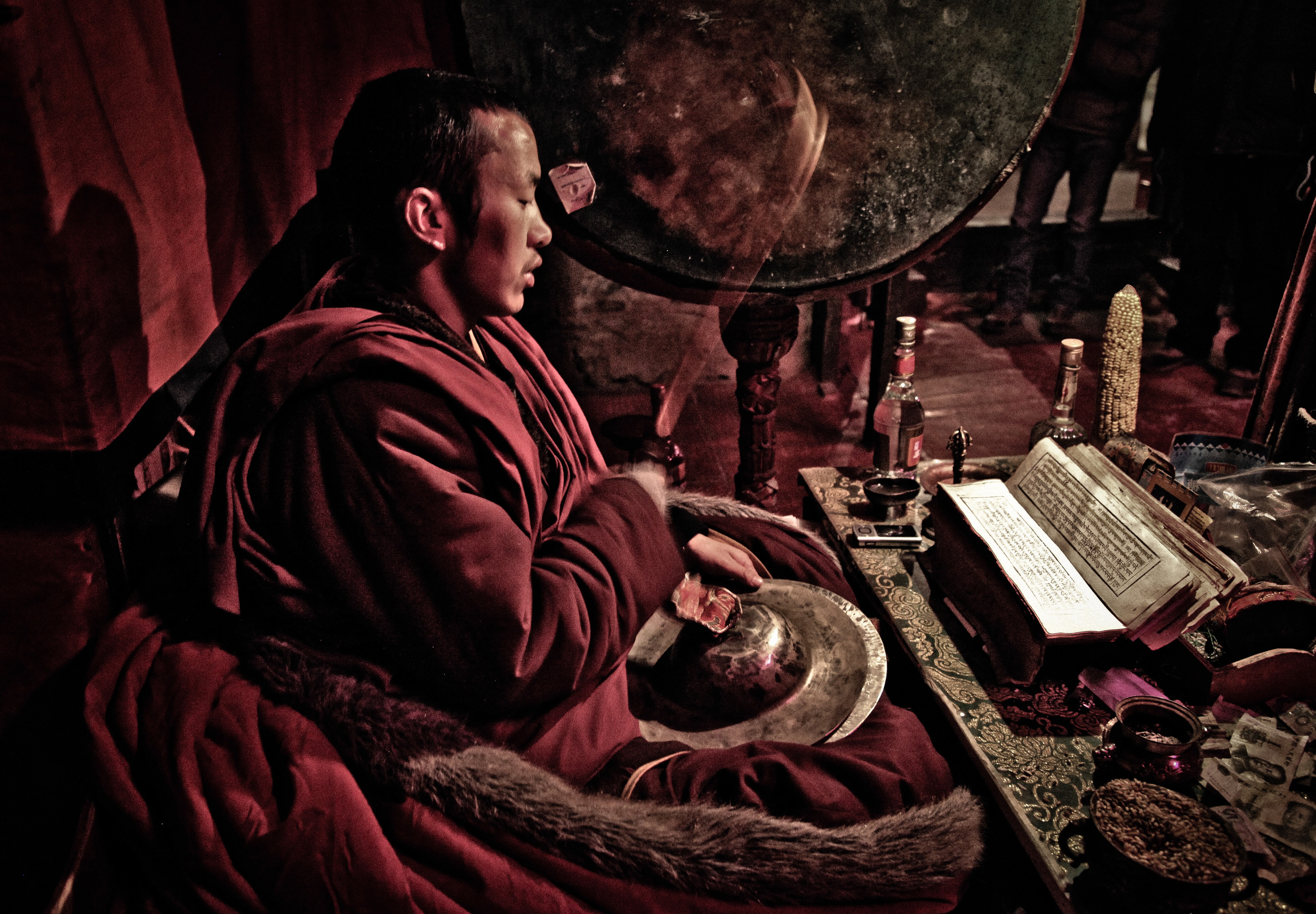
After Atisha introduced lam rim in Tibet during the tenth century, it was quickly adopted by all four sects of Tibetan Buddhism and became pivotal to their monastic education. The lam rim has since been heralded as the most comprehensive, systematic, and effective presentation of Buddhist teachings ever devised.
It is comprehensive—it distills thousands of Buddhist teachings into essential topics and themes: the role of the teacher, karma, refuge, renunciation, compassion, and the view of emptiness, etc. Nothing is left out.
It is systematic. It teaches foundational topics first so the mind and heart are prepared for more advanced ones, much like a building’s scaffolding or an intelligently designed yoga sequence of postures designed to awaken as you proceed. With good foundations, learning flows naturally from one principle and practice to the next—and along the way, insights and skills are refined and internalized.
And it is effective. The lam rim employs a multi-layered approach that optimizes learning:
• Study for conceptual clarity
• Reflection and debate for analytical refinement
• Meditation and real-life application to internalize, test, and embody insight
Modern universities today use similar multi-dimensional learning models: large-class lectures and books deliver knowledge, while smaller seminars, round-table discussions, and debates refine and personalize concepts. Then conceptual and reflective learning are catalyzed with laboratory experiments, hands-on workshops, or site-placement internships for applied, real-world experience. The Tibetans simply developed this sophisticated approach for the inner landscape of the mind—studying, debating, meditating, and applying Dharma to everyday life.
This alone makes the lam rim uniquely and particularly well-suited for contemporary seekers, familiar with a university education, who want clarity and integration rather than the superficial, spiritual smorgasbord we see today.
2. A Cure for Spiritual Confusion and Contradiction
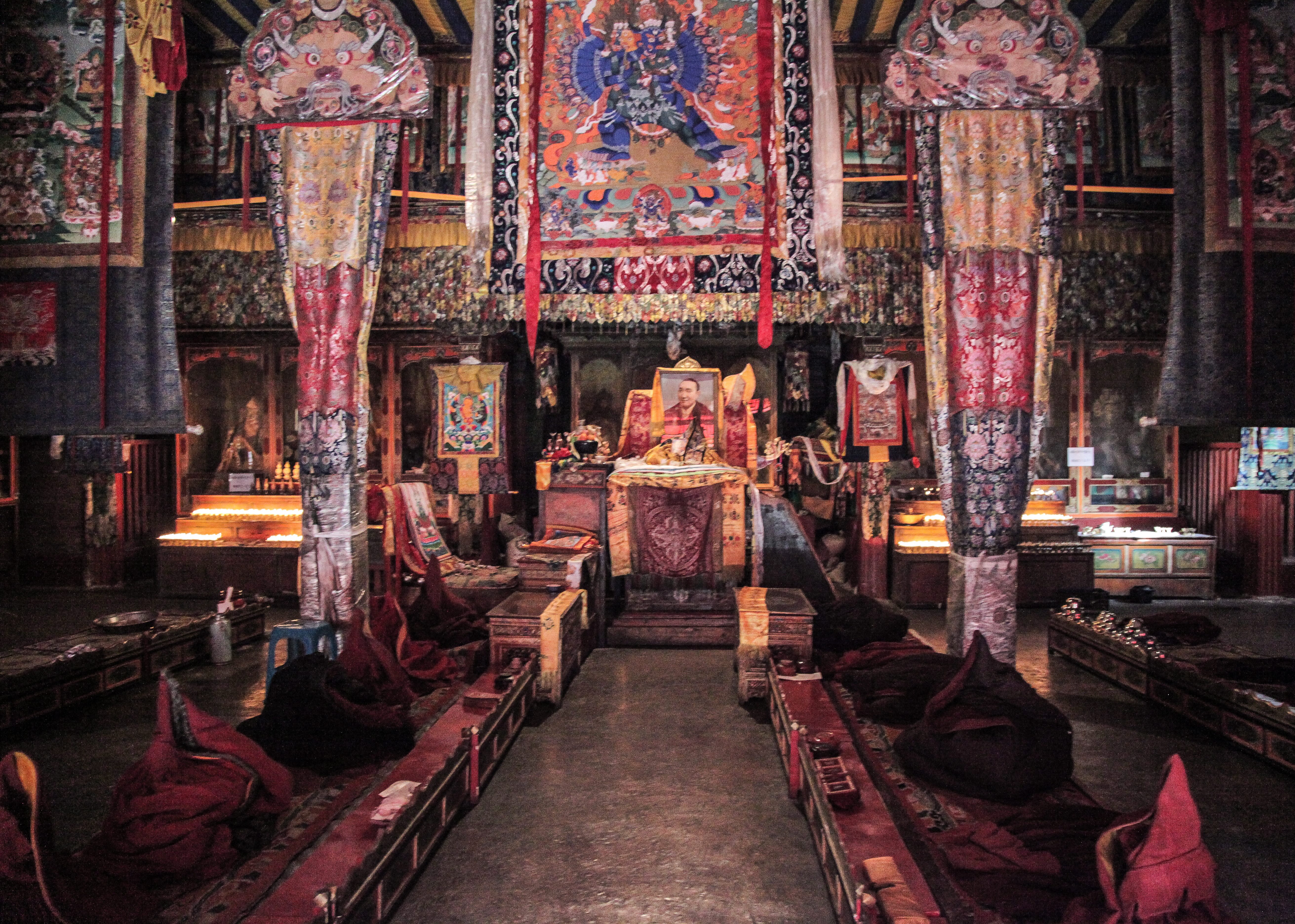
At the time of teaching the lam rim, Lama Atisha had been requested by the kings of Tibet to travel from India because their culture was mired in spiritual confusion. There had already been an initial wave of teaching transmission from India to Tibet in the eighth century, but after two hundred years, there were so many teachings, practices, and lineages—and no meta-map for integration—that certain contradictions and misunderstandings had begun to foment. We may be facing a similar scenario now in modern times, after years of globalization, we have unimaginable access to the world’s spiritual traditions and teachings, but no way to sensemake the information overload, let alone translate it into wisdom.
Atisha resolved contradictions that had confused practitioners for centuries, such as:
• Impermanence and the inevitability of death vs. celebrating the precious human life
• Renunciation of desire vs. the tantric approach of alchemizing desire
• The world is empty and illusory-like, but we need to develop compassion for suffering beings
• The individual liberation of the Theravada school vs. the collectivist liberation of the Mahayana
school
Atisha showed how each teaching is relatively true and necessary within a particular context and how it fits into a larger cartography—once you see the whole map, each principle makes sense, serves a particular purpose, and contradictions and confusions are resolved. Perhaps modern seekers face a similar overwhelm: shall I practice mindfulness or loving-kindness? Attend a workshop on breathwork or sound baths? Prioritize my personal psychotherapy or focus on mantras for all living beings? Should we sample many practices and stay shallow or choose one to go deep and risk missing out?
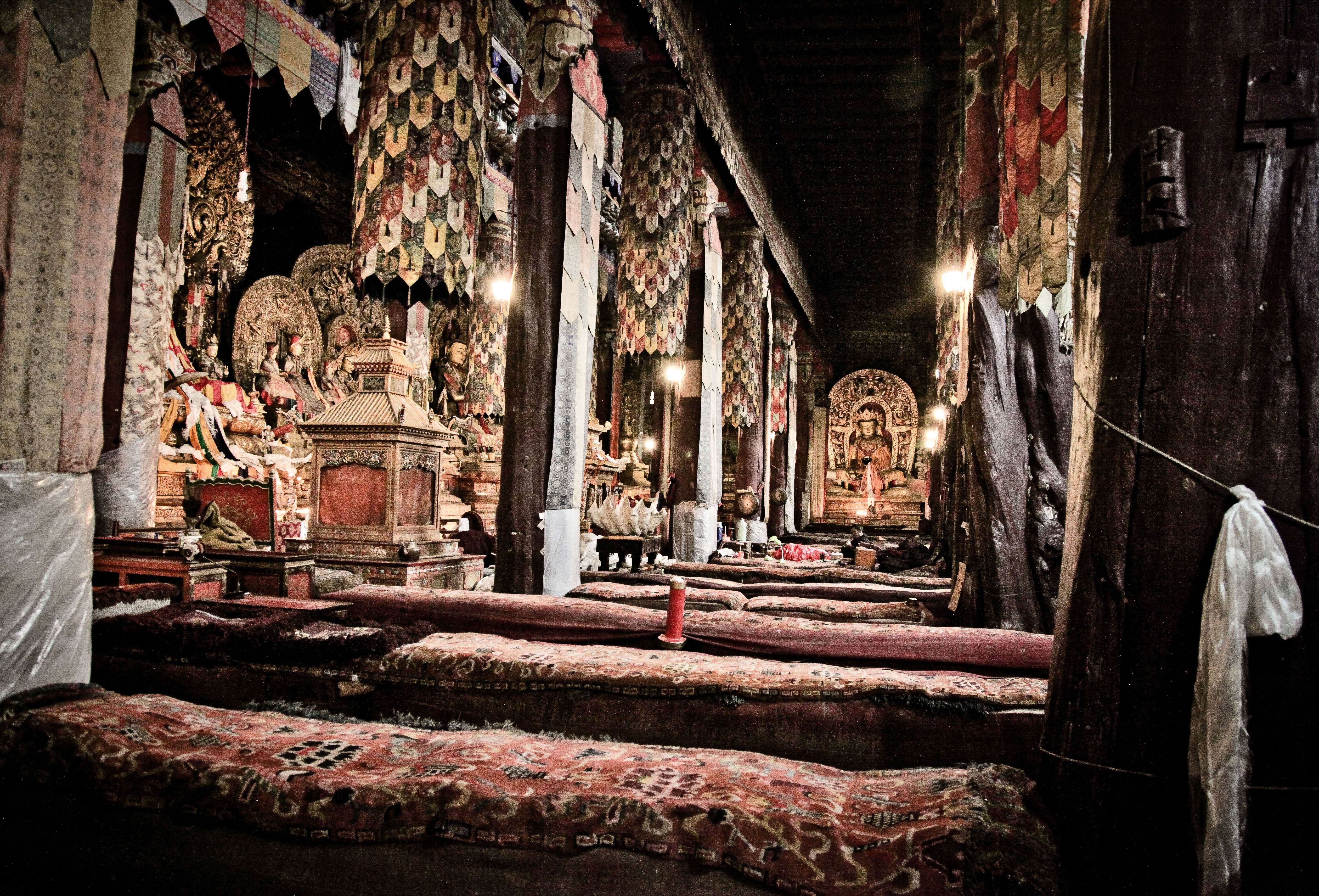
Lam rim can help clarify why, when, and how to practice effectively. It explains why each method exists, when it should be used, and how seemingly contradictory practices actually support one another. In yoga you need both stability and ease; in psychotherapy, acceptance and change. But when, and how? Lam rim offers both the wide-angle view or map that captures to totality, but then delivers the step-by-step guide or path that covers the entire terrain.
3. A Remedy for the Polycrisis and Our Sickness of Paradigm
Beginning January 13, 2026, I’m offering a 10-week lam rim program based on Pabonka’s Liberation for those who want structured mind training and community support during increasing global instability. Many of you wish to travel on outer pilgrimage with me but cannot. This is an inner pilgrimage—accessible to anyone at any time.
The deeper reason I’m teaching this now is that the root of our global crisis is not only geopolitical or ecological. It is paradigmatic.
Robert Thurman calls it the terminal life perspective—the worldview inherited from the scientific revolution that reduced human beings to brain chemistry, stripped the cosmos of meaning, and severed us from the soul, morality, and accountability to our actions. Now we “eat, drink, plunder, for tomorrow we die” and have exported our impoverished worldview around the planet in the Trojan Horse of capitalism and consumerism. The terminal life perspective is fatalistic, nihilistic, hedonistic, self-interested, and destructive. It has led us to create in a few short centuries what cosmologist Rick Tarnas calls a “disenchanted world,” and more than that, it is directly culpable for each of the crises—ecological, economic, energy, food, medical, mental health, and geopolitical—that converge to form the polycrisis.
Like most diseases in modern medicine, its root cause remains to most unknown and untouched. We simply rearrange the deck chairs on the Titanic, hoping our Wim Hoff ice bath, green juice, and 30-minute sessions of mindfulness will bring an end to our personal despair, much less our cultural collapse.
The lam rim offers a far-reaching antidote—one that begins to address the root cause of what I call our sickness of paradigm: the catastrophic, false indoctrination of scientific materialism that
vanquished spirit in the centuries following the Age of Reason. As we became increasingly preoccupied with controlling matter for progress and profit, we lost our way, eventually reaching today’s tipping point in the polycrisis.
The lam rim restores a coherent cosmology and psychology—as above, so below—in which consciousness, like energy, continues lifetime after lifetime because it is indestructible—not terminal, akin to the first laws of thermal dynamics. As I will teach in Liberation in Our Hands, we have a soul, and we must reclaim our relationship with it if we are to revivify life as we know it.
The lam rim also restores our understanding of the science of karmic causality. There are both invisible and visible effects of our actions; everything is interconnected, and nothing we do is inconsequential. Our choices ripple inward and outward, shaping us and future generations alike. To live wisely again, we must reacquaint ourselves with karma theory—not as blind or superstitious belief, but as a precise description of how actions shape perception and experience over time.
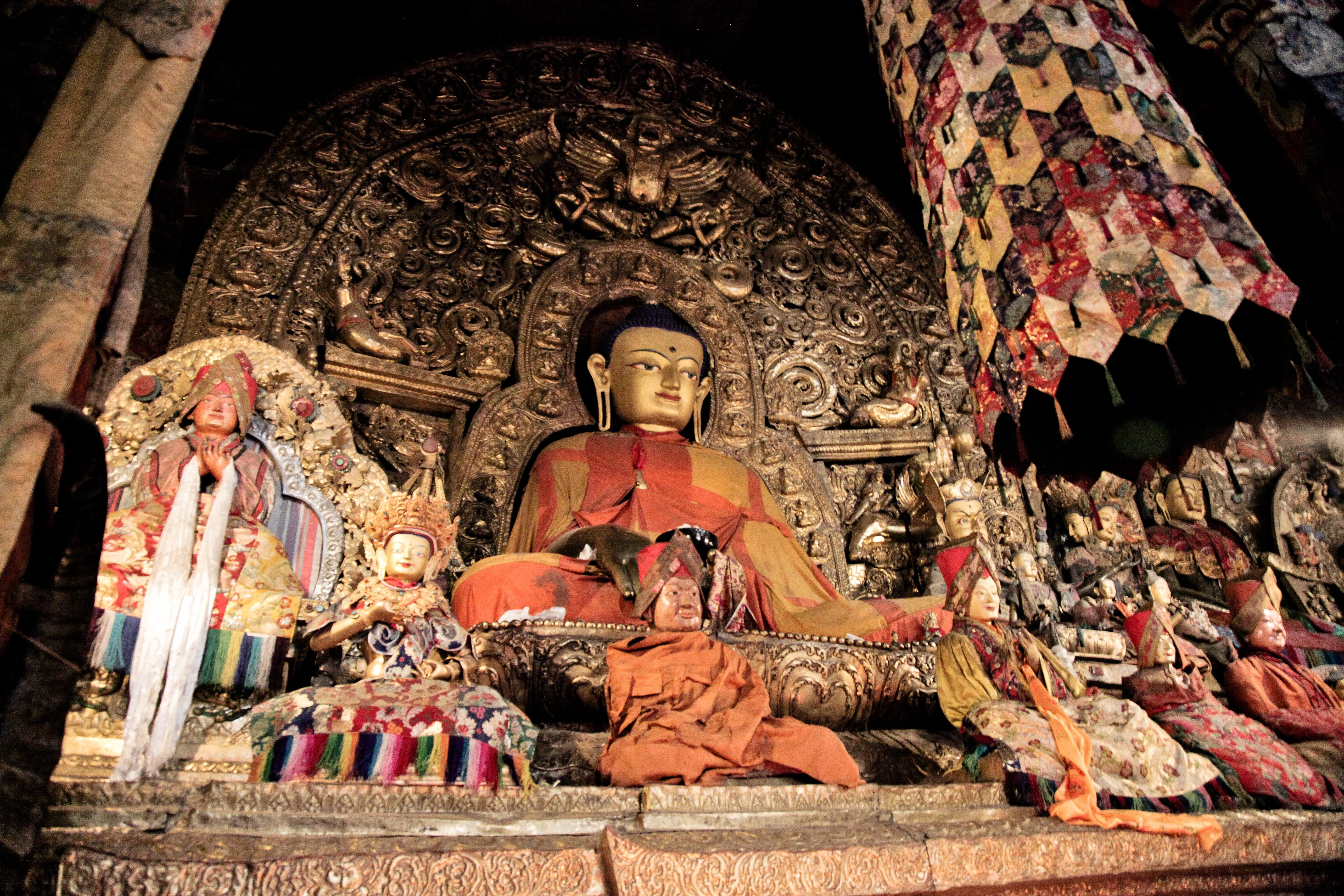
Along with this, the lam rim revives a sense of sacred relationship. Our bonds with one another, the natural world, and unseen dimensions of life were once honored and protected by ancient wisdom cultures the world over. That harmony has been severely fractured by our modern, exploitative, competitive mindset that treats life as a resource to own rather than a relationship to respect. We are called to return to a moral code of conduct that is resensitized to our interbeing and universal responsibility.
Most importantly, the lam rim restores a noble motivation worth living for. Awakening to our deeper interdependence and compassion for others becomes the very lifeblood of purpose and meaning in a precious human life. We are no longer here merely to survive, consume, or distract ourselves, but to wake up—for the benefit of all, to have an impact on collective wellbeing and awakening. According to the Buddha and his heirs, inner transformation of consciousness is innately blissful and is actually what evades us when we are futilely attempting to secure external fame, fortune, and validation in a changing world.
In this way, the lam rim offers us the opportunity to reclaim the soul, reacquaint ourselves with the reality of causality, repair and reharmonize our fractured relations with others, reestablish a moral code of conduct to live by, and restore a proper motivation that actually generates meaning and purpose in the face of a challenging world.
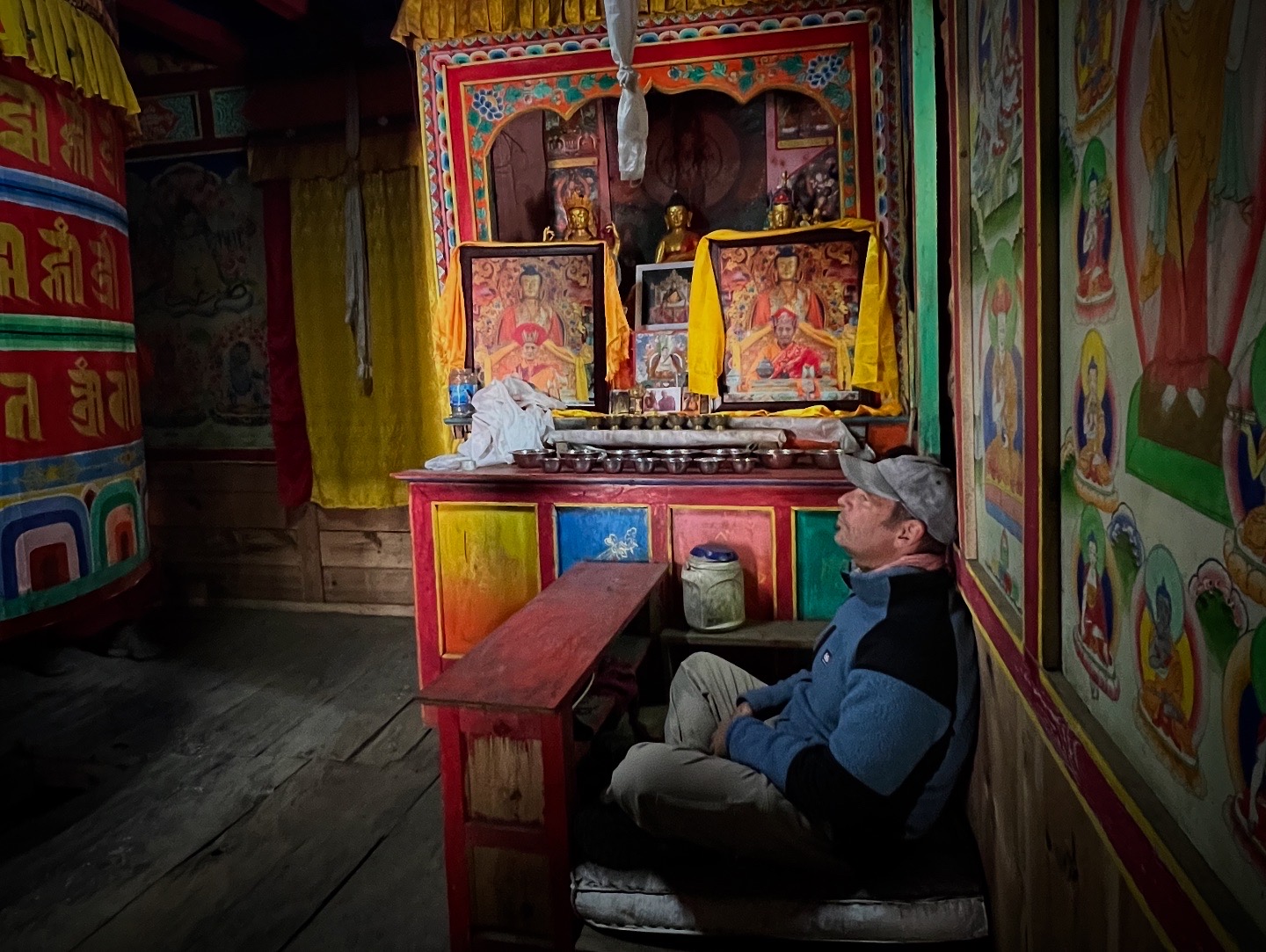
After years of teaching, I’m convinced that watered-down presentations of Buddhism—what I’ve called McMindfulness—which appeal to modern sensibilities while leaving our materialist worldview intact, do not cut deeply enough to offset the unintended damage we cause ourselves and the planet. What we need now is full-strength wisdom: a path that challenges our most fundamental assumptions about reality, transforms how we see the world and relate to others, and patiently rebuilds insight and meaning from the ground up, the way the World Peace Stupa is being rebuilt stone by stone in the high Himalayas of Tsum Valley, Nepal.
To learn more and register in the course please hit the button below.
Stay connected with news and updates!
Join our mailing list to receive the latest news and updates from our team.
Don't worry, your information will not be shared.
We hate SPAM. We will never sell your information, for any reason.


