
Why Tsum Valley Offers a Counterculture to Modern Life: 5 Lessons from the Himalayas
Jun 04, 2026Tsum Valley is a remote Himalayan Buddhist region in northern Nepal near the Tibet border, home to Rachen Nunnery, hidden yogic traditions, and the endangered Mu Monastery. Through annual pilgrimage, retreat, and service work with Geshe Tenzin Zopa, we explore why this extraordinary valley offers a striking alternative to many modern assumptions about success, fulfillment, and what it means to live well.
We live in an age of degradation and decline. Our attention spans are shrinking, our identities increasingly inflated, and our lives organized around stimulation, convenience, and instant gratification. We are more connected than ever and yet often more lonely, distracted, anxious, and dissatisfied. It is possible to have unprecedented access to information, entertainment, wellness, and self-expression while remaining profoundly spiritually malnourished.
From my perspective as a psychotherapist, Buddhist teacher, and pilgrimage guide, this spiritual malnourishment is not merely an individual problem but a cultural condition and, more broadly, a symptom of what I call a sickness of paradigm, revealing the shadow of scientific materialism. Many people feel intuitively that something essential is missing — the soul — yet struggle to find environments organized around radically different values. Thus, they continue to gratify and aggrandize the senses, which are fleeting.
Tsum Valley represents one such environment.
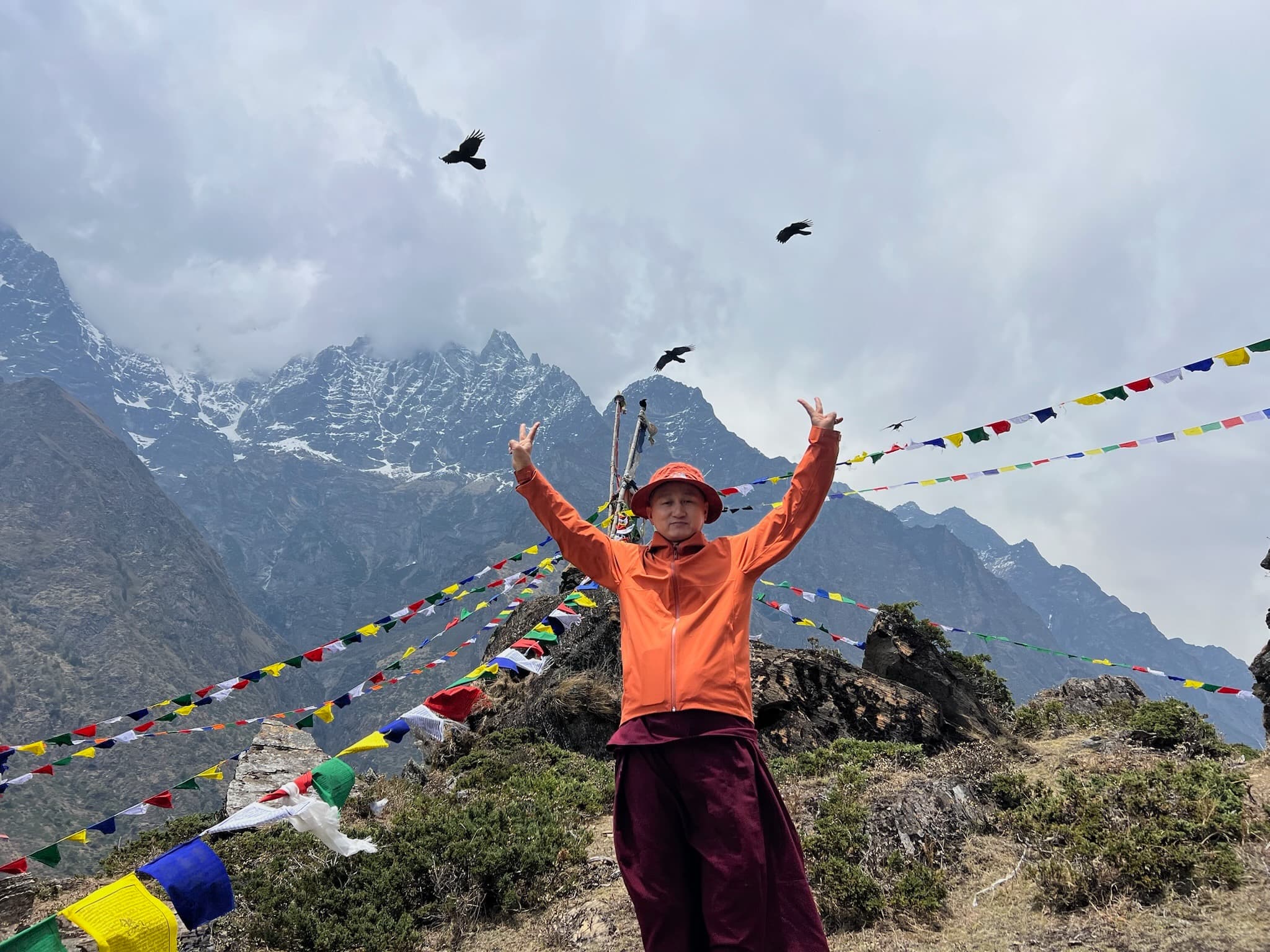
Returning there year after year with Geshe Tenzin Zopa, and helping regenerate Mu Monastery for future generations, has convinced me that places like these matter not only because they are beautiful or ancient, but because they quietly challenge many of the assumptions upon which modern life is built.
- Hidden Rather Than Performative: What Tsum Valley Teaches About Renunciation
Modern culture rewards visibility. To exist today often feels synonymous with being seen. We curate identities, cultivate audiences, manage reputations, and increasingly measure value through attention, influence, and validation.
The nuns of Rachen Nunnery preserve a strikingly different archetype: the hidden yogi.
Their lives are not organized around self-promotion, recognition, or the cultivation of a personal brand. They are not looking outward for confirmation that their lives matter. To many modern eyes, they are simply invisible. Yet this hiddenness is not deprivation or lack of worth. It reflects renunciation in its deeper Buddhist meaning: freedom from compulsive grasping at external status, fortune, or meaning from an impermanent world in order to feel complete.
The things we do together in Tsum with Geshe-la will never make headlines or go viral. They are not sexy but innocent, remain humble rather than sensationalized, oriented inwardly rather than performative, aim for inner wellbeing rather than outer gain, and align with altruistic service rather than self-promotion. Like an endangered species, few places on earth still embody these values with such consistency.
- Pure Rather Than Commercialized: A Himalayan Alternative to Consumer Culture
To enter Tsum Valley is to feel, almost immediately, that one has crossed into another dimension of reality. Life has changed remarkably little there across centuries. There are few hotels, almost no cafés, little commerce directed toward tourism, and scarcely a reliable Wi-Fi signal.
One senses not merely the absence of infrastructure, but the relative absence of many modern compulsions.
The valley does not organize itself around endless stimulation, convenience, comparison, or consumer choice. In Buddhist language, Tsum remains less governed by the frantic movement toward and against the eight worldly winds: gain and loss, praise and blame, fame and obscurity, pleasure and pain.
For visitors accustomed to constant input, this simplicity can initially feel shocking, even uncomfortable. Yet after several days, another experience often emerges. The nervous system begins to remember that human life can move according to rhythms other than productivity, distraction, and perpetual acceleration.
- Depth Rather Than Spiritual Consumerism: Why Lineage Still Matters
Much contemporary spirituality offers techniques without lineage, wellness without philosophical depth, or contemplative practices detached from coherent cosmologies or ethical foundations. In our fragmented modern secular culture, pseudo-spiritual life can easily become another form of consumption. Tsum preserves something older and much more integrated.
The culture remains deeply shaped by a thousand-plus years of Tibetan Buddhist values, contemplative practice, ritual life, devotion, compassion, and intergenerational lineage transmission. Spirituality here is not a lifestyle enhancement layered onto ordinary existence; it remains one of the organizing principles of existence itself.
This matters because the period of instability we are now undergoing is revealing to those with a keen eye how important inner refuge really is. Information does not necessarily provide stability or reliability. Endless stimulation cannot keep us "high". When individuals and societies enter periods of chaos, loss, uncertainty, or collapse, traditions refined across centuries to address suffering, impermanence, death, and transformation suddenly become profoundly relevant again.
This depth is one reason I bring groups to Tsum. It offers not an escape from reality, but a living encounter with traditions whose explicit aim is awakening.
- Interdependence Rather Than Radical Individualism
Much of contemporary life revolves around the sovereign self: my success, my fulfillment, my identity, my optimization. Freedom is often defined as independence from obligation. Tsum reflects a different worldview.
Meaning arises through relationship: lineage, family, village, monastery, teacher, land, and service. Life remains embedded within networks of mutual responsibility and shared purpose.
This is not a romantic claim that Himalayan life is free from hardship or complexity. Tsum is a hard place to live, especially for those who have grown accustomed to modern comforts and conveniences. Even Geshe Zopa, born and raised in the Tsum, reporting on the conditions during his past return visit, "Here, my mind is in bliss, but my body is like mashed potatoes!" Human beings remain human everywhere, creatures of comfort. Yet there is nonetheless a palpable difference between societies organized primarily around individual self-gratification and those still shaped by lived interdependence with harsh realities of the natural world.
At a time marked by loneliness, polarization, and social fragmentation, Tsum quietly reminds us that belonging itself may be a form of medicine.
- Stewardship Rather Than Consumption: Why the Mu Monastery Service Project Matters
Modern civilization tends to think in short horizons: immediate gratification, quarterly returns, rapid extraction, endless novelty. Tsum Valley and Mu Monastery invite a much longer imagination. One thinks not only in terms of personal advancement or even a single lifetime, but in terms of karma, lineage, legacy, stewardship, and posterity. This is one reason the regeneration of Mu Monastery matters so deeply to me.
High on the Nepal–Tibet border, Mu Monastery remains an ancient sanctuary now in urgent need of restoration and care. Supporting its future is not simply a preservation project. It is direct participation in the radically different value system that the entire Tsum Valley represents. To preserve sacred texts, ritual objects, buildings, contemplative space, and living dharma culture for people we may never meet. To act not only for immediate personal benefit but for future generations, future practitioners, and — within a Buddhist worldview — future lives.
The Mu Monastery Service Project offers something remarkable: an opportunity not merely to admire alternative values from a distance but to embody them. And to thus bring that back to our respective homes as a living counterculture to the sickness of paradigm spreading, consuming us like cancer. To live altruism rather than consumption. To orient toward sharing, protecting, restoring, and offering rather than merely acquiring, optimizing, or accumulating. To participate in an archetype of regeneration at a moment when much of the world feels organized around extraction and collapse.
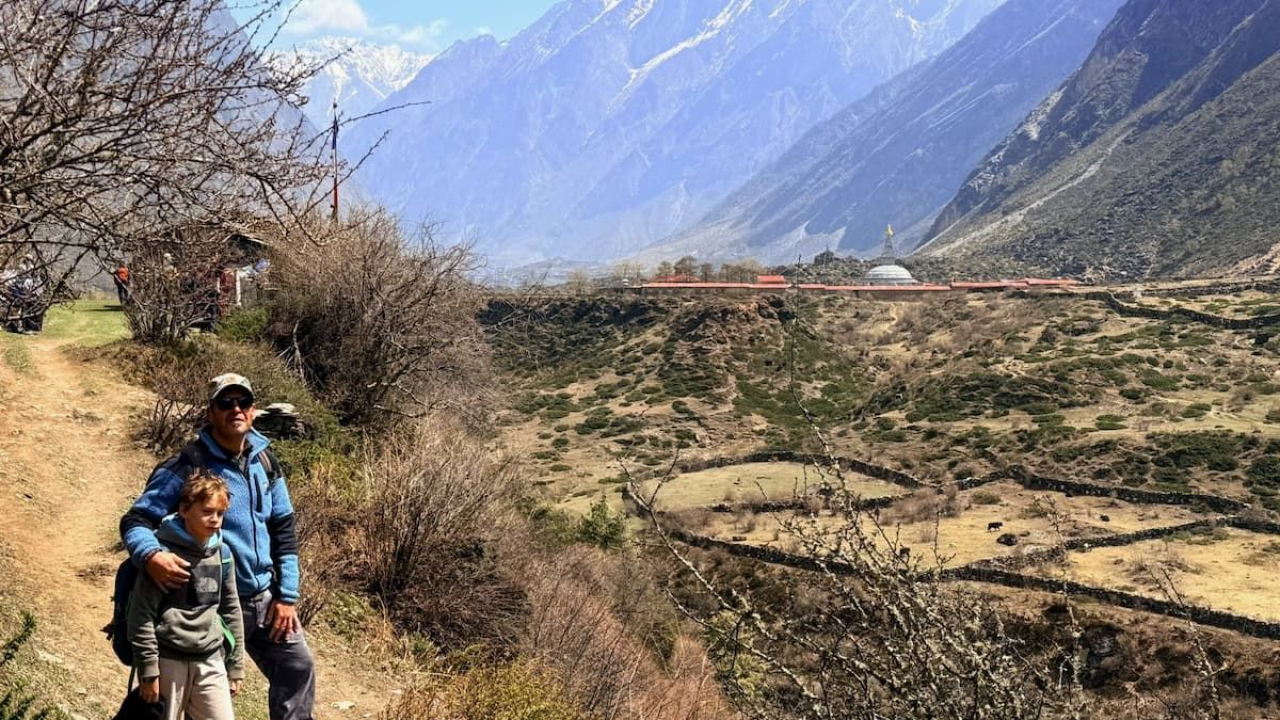
This is why I continue returning to Tsum. It is why I bring my children up there, to form bonds with the nuns, villagers, landscape, and sacred architecture. Bodhi and Pema helped build the World Peace Stupa. I taught them to prostrate on the centuries-old floorboards at Mu Monastery, to light candles at the shrine, to hang prayer flags in the wind, and to walk on foot for 8 hours side by side with yaks and donkeys, along a trail that has seen centuries of trade between Nepal and Tibet. They are cultivating a relationship with this place, and because of that relationship, they will feel a natural affinity and stewardship of this place in the future. It is being in relationship that makes us feel empathy, compassion, and responsibility. In a world where everything is disposable, manufactured, soulless, and disconnected, this is why I believe places like Tsum Valley and Mu Monastery matter not only now, but centuries from now.
Few people on earth still live according to these principles with such integrity. Geshe Tenzin Zopa, the nuns of Rachen Nunnery, Tsum Valley, and the fragile future of Mu Monastery remind us not only of what matters most, but that another way of life remains possible.
Quietly. Almost invisibly. Like a beacon hidden in the Himalayas.
The Restoration Project
Be Part of the Restoration of a Hidden Himalayan Gem.
View the Mu Monastery Project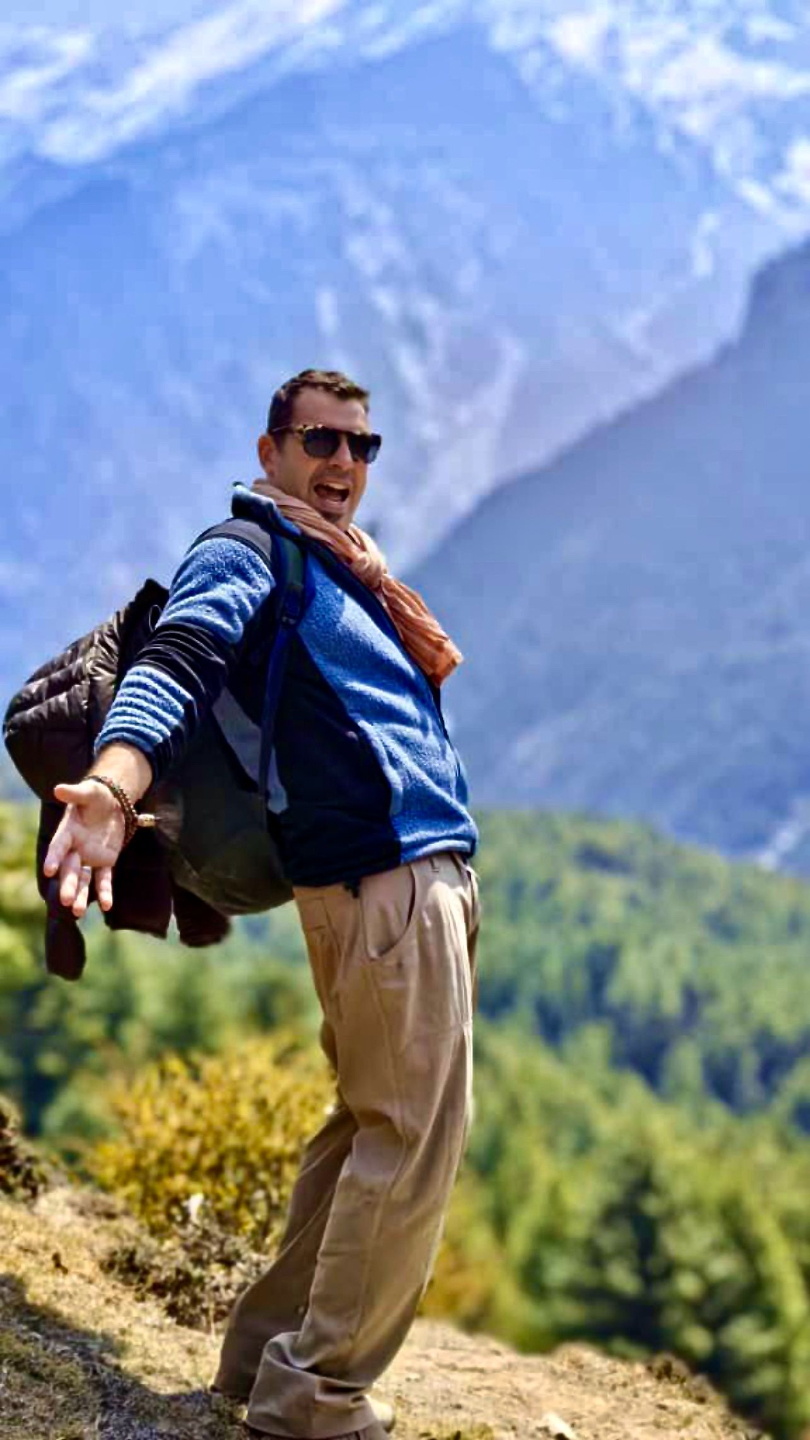
Dr. Miles Neale is a psychotherapist, teacher of Tibetan Buddhism, and founder of Gradual Path for inner and outer journeys. He is the author of Return with Elixir and Gradual Awakening, and co-editor of Advances in Contemplative Psychotherapy. Miles has taught at integrative medical clinics at Harvard, Columbia, and Cornell University Hospitals, leads pilgrimages worldwide, and is based in Bali, Indonesia.
Stay connected with news and updates!
Join our mailing list to receive the latest news and updates from our team.
Don't worry, your information will not be shared.
We hate SPAM. We will never sell your information, for any reason.

